
At this point, I’ve started this write-up with three or four different intros, and I still can’t decide if I want to lead with how bonkers this course is—or how thoroughly it kicked my ass back in high school when Suttons Bay hosted tournaments here.
Either way, Bahle Farms is the subject today.
The Loopers made a spring visit on May 14th, and I’m pretty sure it was the first time I’ve played it since those high school years when the course stole my lunch money and gave me metaphorical wedgies.
I did my homework this time. Numbers crunched, overhead views studied. I came in with a game plan and stuck to it—to see how well I could scout out a course I hadn’t seen in over a decade. I’d give myself a solid B. The few tweaks I’d make mostly involve avoiding spots with brutal lies and aiming for flatter parts of the fairway. I’ll point those out when I go hole-by-hole.
Sure, I visited a few spots I intended to avoid but that’s more on my swing than my strategy. Keep an eye out for the red highlighted areas on the overhead and do everything you can to avoid these areas.
Get ready, because I’m about to gush over most of the holes here. Bahle Farms doesn’t mess around—and when they call it a hidden gem, they’re not kidding.
This place is bad-ass and shot straight up my unofficial list of favorite courses.

#1 376
Up 19’ from 150, up 14’ from 100
Green 25 yards deep
The opening hole at Bahle is a great introduction to what you’re going to deal with for the next four hours.
Fun fact: 11 out of the 13 par 4s and 5s at Bahle feature a downhill tee shot followed by an uphill approach. That means there's usually a flat zone somewhere in the fairway where the downhill ends and the uphill begins—and I'm here to argue that finding that flat spot is a key to scoring well at Bahle Farms.
Sure, we can all handle some awkward uphill/downhill/sidehill lies. But the more of them you face, the higher your odds of messing one up. Consistency loves a level stance.
Go ahead and smash driver off the first tee, but favor a miss to the left. Not only does the left side give you a better angle in, but once you're past the trees at around 210 yards, the fairway opens up into a shared rough with the 10th hole—giving you more room to work with.
The green complex is elevated by 10+ feet depending on your position in the fairway, so don’t forget to add a few extra yards to your approach. Anything just short finds a false front and rolls off the front. The green slopes back-right to front-left, and if you miss right, there's a chance the ball could kick back onto the putting surface.
Be extra cautious with a back pin. Anything just off the green long tends to run away fast, and it can make for a tricky up-and-down. For those with a rangefinder, shoot the front edge and the pin. Subtract the pin and the front edge and you know how much room you have to work with.
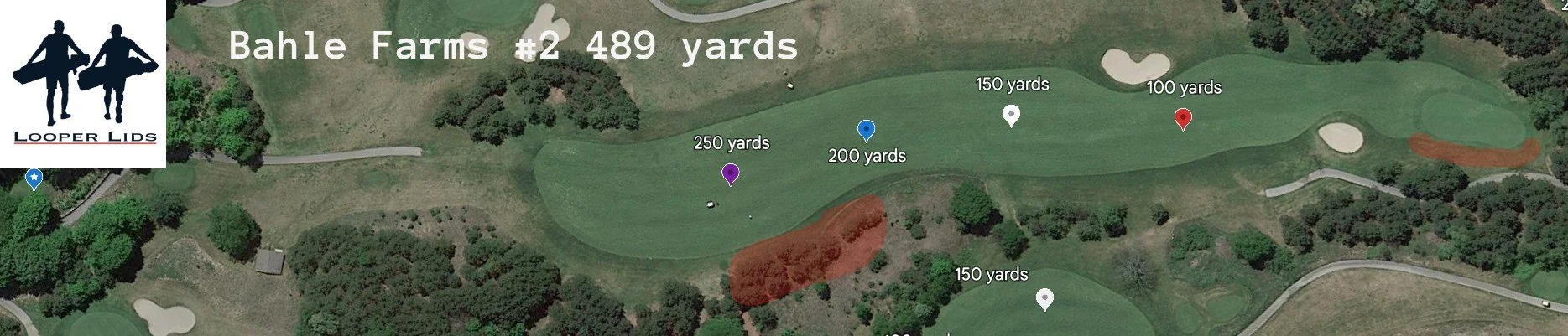
#2 489
52’ down from tee to 250 marker
Up 20’ from 100, up 24’ from 150, up 20’ from 200
Green 35 yards deep
The view from the tee on the elevated par-5 2nd is easily one of the best on the entire property. The 50-foot drop to the fairway gives you a little extra carry, making this a reachable par 5 for many players.
Much like the first hole, you’ll want to favor a miss to the left off the tee. As long as your ball travels 200+ yards, it’ll carry the trouble and be in good shape—even if it’s not perfect.
If you're laying up, the smart play is to get past the left fairway bunker. The green slopes severely right to left, and approaches from the right side of the fairway can be really tough to hold—even if you hit a great shot.
For those going for it in two, the same advice applies: miss left if you’re going to miss. The left side gives you an uphill lie with a friendly slope to help keep your ball under control. Be sure to add 5 yards to your number to account for the uphill approach.
The green itself has two strong slopes—back to front and right to left. We had a fairly friendly front-right pin, but anything in the back half of the green brings a lot more danger into play.
It’s a short par 5, but don’t sleep on it—get out of position, and it can bite back.
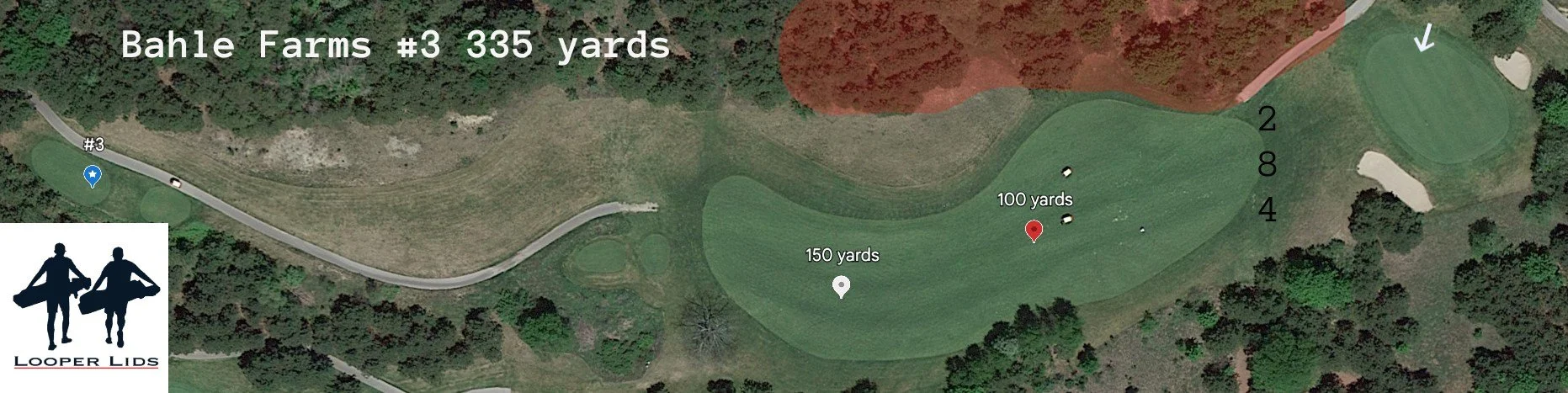
#3 335
284 end of fairway
Down 32’ tee to 100 yards
Up 30’ from 100, up 39’ from 150
Green 27 yards deep
The 3rd hole gives you another elevated tee shot, dropping 30+ feet to the fairway. Despite the dramatic view, the total elevation change from tee to green is only 2 feet, which can be deceptive.
Off the tee, the left side of the fairway is blocked by a hillside, so your target should be the middle of the right greenside bunker. This line gives you plenty of margin on either side, as long as you don’t get too aggressive with club selection.
The end of the fairway is at 285 yards, and with the downhill, it plays even shorter. The widest and flattest landing zone is between 110 and 80 yards, so ideally you’re looking for a 200–200 yard shot off the tee.
I hit a 5-wood (not well) and missed left. Looking back, I wish I’d hit 4-iron. A well-struck 5-wood would’ve left me with a nasty uphill lie and a ¾ wedge. When combining an uphill stance with a slower swing, you’re looking at taking a 1 way trip to Chunkville.
From the fairway, you can’t see the green. We had a left pin, but I had no clue until I drove the cart up. The left side of the green slopes hard back to front, while the right side is more subtle.
From 100 yards out, you’re hitting to a green that’s 30 feet uphill. That’s at least an extra 10 yards—and even more if you’re not a high ball hitter.
I didn’t score well here, but it’s a fun, well-designed hole that rewards smart planning and quality execution.
Big fan.
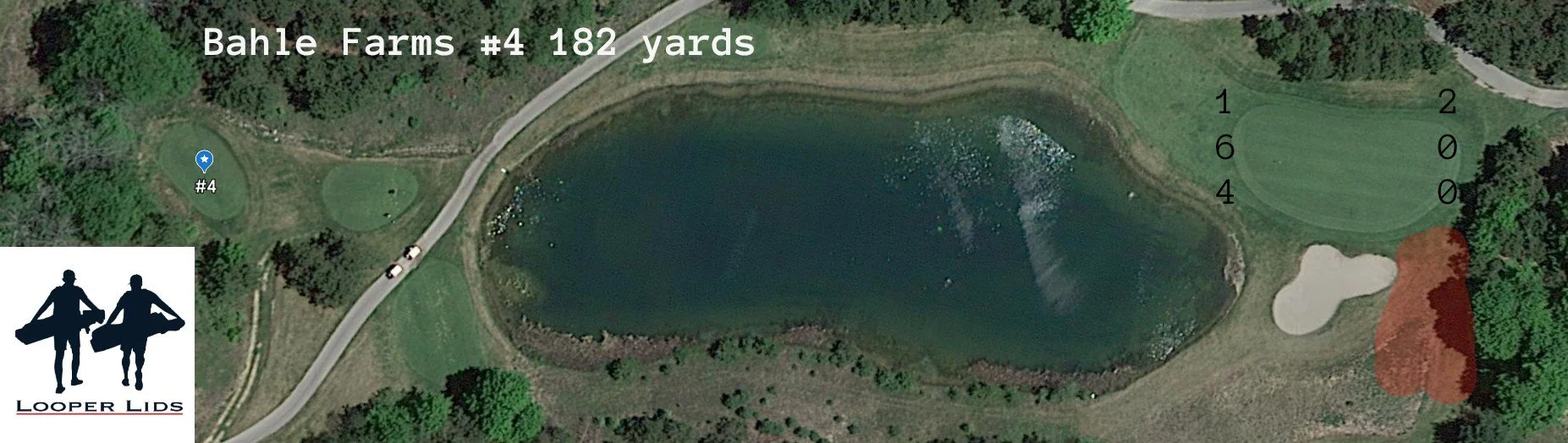
#4 182
164/200
Down 13’ tee to green
Green 36 yards deep
The only water hazard on the course separates the 4th tee box from the green, and it’s very much in play.
From the blue tees, you’re looking at about 180 yards to the pin, with a carry of 150–168 yards over the water. The hole plays about 5 yards shorter thanks to the downhill, but that visual of water stretching in front of you has a way of getting in your head.
It got in mine.
I should’ve hit 7-iron, but the little voice in my head said to play it safe and hit a soft 6—"No reason to flirt with the water,” it said. I slightly pulled it, and the ball bounded past the right bunker and down into a low area. Not a good spot.
A 7-iron would’ve been perfect. Lesson learned.
The green slopes left to right, and based on pin position, your ideal miss changes:
Front pin? Miss left for an easier chip or putt.
Back pin? Miss right, as left leaves a much tougher up-and-down. Easy up and down from the bunker.
This is a straightforward but mentally tricky par 3. Trust your number, commit to the shot, and don’t let the water play tricks on your club choice.
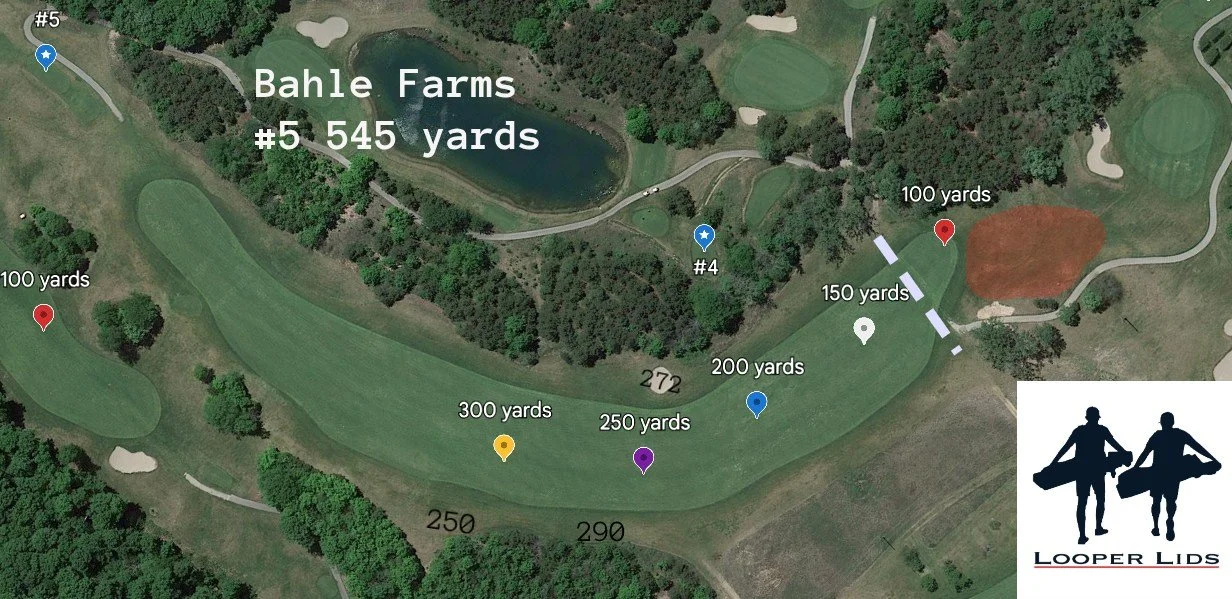
#5 545
250 to right trees
Left bunker 273
Lay up is 130 yards
Up 8’ from 100, up 5’ from 150
Have to be left of left mow line off tee
-15 from right tree on lay up
Green 26 yards deep
The long par-5 5th is a straightforward challenge for shorter hitters, but it leaves a tough decision for the big hitters.
I absolutely smoked my drive on this hole—easily my best of the day—and was left with 260 yards to the pin. The problem? To reach the same tier as the green, I needed to carry it at least 240 yards in the air. Anything short kicks back into a low bowl of rough, sitting about 30 feet below the putting surface.
I chickened out and laid up—supposedly the “safe” play.
But here's the catch: the fairway ends at 100 yards from the green. But the downslope starts 130 yards from the hole. I flushed a pitching wedge, caught the downslope, and ended up on a 45° down/sidehill lie in the rough. Total disaster.
Let’s break this down.
Off the Tee:
You want to aim more left than you'd expect. The right-side trees jump into play around 250 yards, so most golfers should aim at the left edge of the rough, or even just left of it, to give yourself a good angle and avoid trouble.
Lay-Up Strategy:
As mentioned, the fairway runs out at 100 yards, and that last 30 gets really dicey.
A helpful tip: use your rangefinder to shoot the tree on the right edge of the fairway—that marks the end. Then subtract 30 yards to figure out a smart lay-up distance. Trust me—you don’t want to land on that slope.
In hindsight? I should have just pulled 3-wood and tried to get it up near the green. It made me sick to hit a perfect drive and then have to finesse a less-than-pitching-wedge just to set up a playable approach.
The Green:
The putting surface slopes from back-right to front-left. Your safe miss is to the right, and there’s more room around the green than it appears from the fairway. It’s not as tight as it looks—just don’t overthink it.
Moral of the story: Trust your swing, and if you go big off the tee, be ready to go big again. Don’t let a great drive go to waste.

#6 171
Up 5’ tee to green
158/183
Not to throw shade at #6, but it’s probably the least memorable of Bahle Farms’ five standout par 3s. That said, don’t let the lack of flair fool you—this one is one of the more difficult on the course.
This medium-length par 3 plays slightly uphill and is often into the wind, making it a real test. You’ve got to step up and make a committed, quality swing.
The green has some serious tilt to it, sloping from back to front with a ridge in the back-middle. From that ridge, the green funnels both left and right, depending on where your ball ends up.
The front bunker looks intimidating, but the real trouble is long and in the back bunker. Short is definitely better than long here, but make sure to take the elements into consideration.
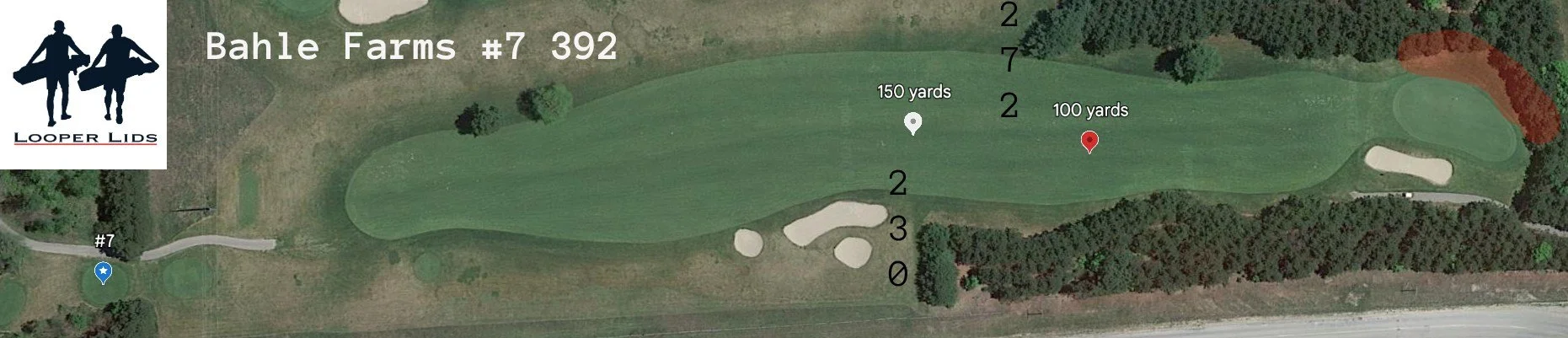
#7 392
Left trees 272
230 to carry right bunkers
Down 37’ to 150 and down 33’ to 100
Up 31’ from 150, up 28’ from 100
I can say without a doubt that #7 is my favorite hole at Bahle Farms. The overhead map doesn’t do it justice, so I’ve included a photo from my May round to help bring it to life.
The right-side bunkers do a great job of messing with your head. They practically dare you to aim further left, which—paired with the prevailing right-to-left wind—can easily get you blocked out by the trees on the left. The best line? Aim at the lone pine tree just left of the fairway.
The fairway pinches at 272 yards left and 240 yards right, so there’s an argument for leaving the driver in the bag. But standing on the tee, it definitely feels like a driver hole and our flat zone is between 140 and 100 yards.
This is classic Bahle: a downhill tee shot followed by an uphill approach, and this might be the most intimidating one yet. The green sits 30 feet above the 100–150 yard approach zone, so club up by at least 10 yards.
The green itself is two-tiered, divided by a 3.5-foot slope. We had a middle-left pin just onto the upper tier. I played a pitching wedge instead of a 9-iron—figuring I’d rather be short on the slope than risk going long left, which might be the worst miss on the course.
I hit a solid shot that landed on the slope and trickled to the lower tier. Made the 5-footer to save par. No regrets.

#8 391
Down 56’ tee to green
230 to get past shoot
Up 11’ from 100, up 3’ from 150
280 to barn
I keep circling back to the round we just played—but hey, it’s fresh in my mind and helps bring these write-ups to life.
The 8th hole almost earned the nickname “Barn Birdie”, but a missed 12-footer downgraded it to a less catchy “Barn Par.”
This downhill par 4 drops at a consistent 8% grade for 270 yards, or 68’ for my non-math geeks. This much drop makes it a fun driving hole that starts in a chute of pines and opens up as you go. The left tree line ends at about 230 yards, so a miss left is much safer than flirting with OB right.
Just one thing to watch out for: the old barn at 280 yards. Yep—that barn.
Here’s the origin story of "Barn Par": Michael hit a pulled drive that was on a rocket towards the barn. Hit the barn on the one bounce and kicked 30 yards backwards. Measured with a rangefinder. He proclaimed that he’ll make birdie from there and then hi-fived me while proclaiming “barn birdie!” a quality 9 Iron from the rough and had a good look for the birdie… only to let us all down.
The green is tucked behind the right bunker and pitches from back-right to front-left. The best miss is short and left, which gives you a straightforward up-and-down.
This hole is awesome, just don’t get caught up in the right bushes that I was thankful to find my near OB tee shot but was humbled quickly when trying to escape said bushes.
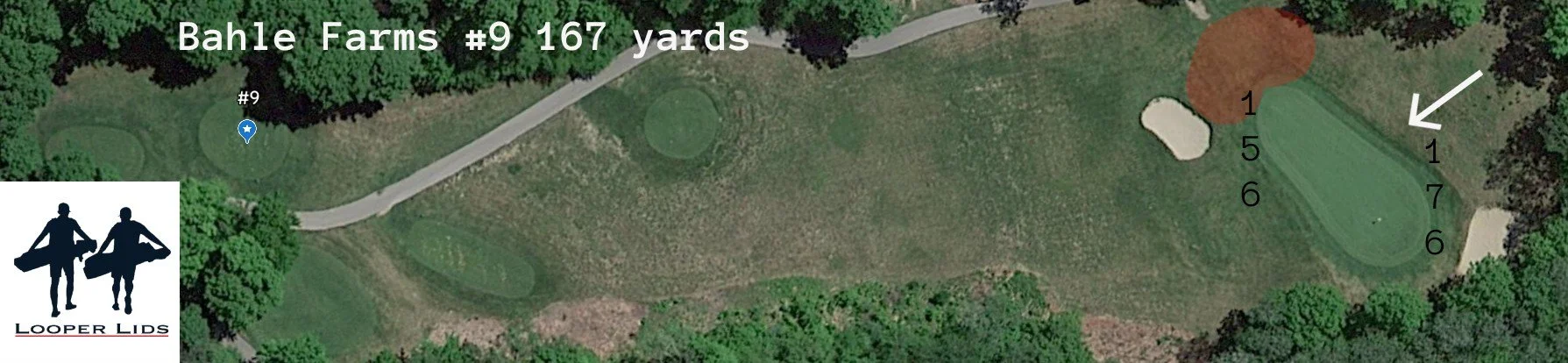
#9 167
Down 20’ tee to green
156/176
For me, the 9th is the most memorable hole on the front side. Back in high school, I’m pretty sure we only played the front nine in tournaments, and this hole is burned into my memory.
This downhill par 3 comes with one of the best visuals on the course: a steep hillside rising behind the green. It gives you the illusion that you could just nuke one 20 yards long and let it Plinko its way back down to the pin. It’s a great fantasy—but trust me, not a strategy to try in real life.
That hillside? Closed for business. So we’ve got to avoid missing long, or we’ll be stuck with a nightmarish downhill chip that brings double bogey into play.
The smart miss is short and right, which gives you a friendly upslope to work with. A miss left? Also bad news. Wind usually isn’t a huge factor here since the trees sit well above the green, but the downhill drop will take about 6–7 yards off your shot, so club accordingly.
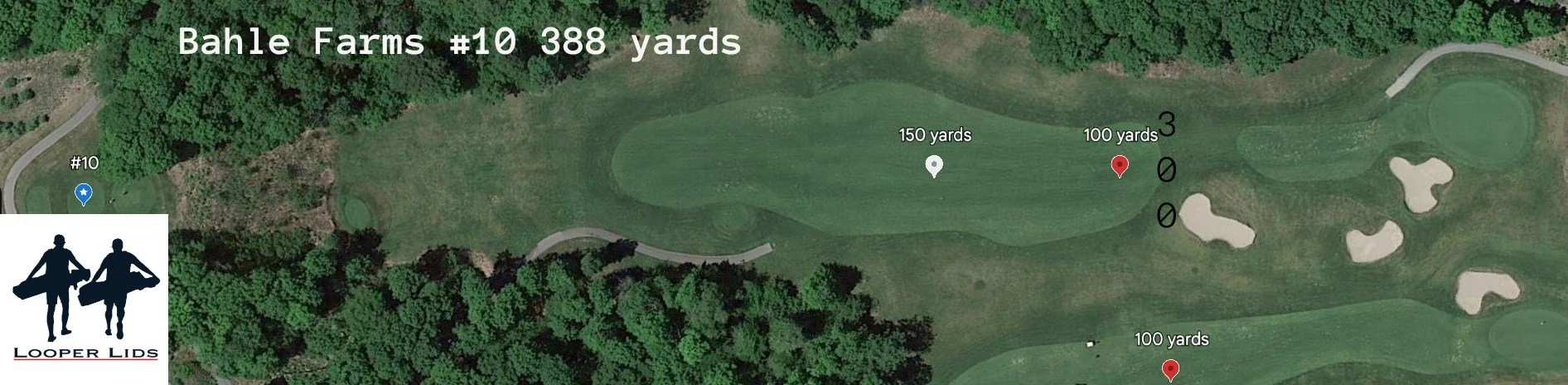
#10 388
300 end of fairway
Down 4’ tee to green
Up 33’ from 150, up 23’ from 100
We start the back nine in a familiar fashion—downhill tee shot, followed by an uphill approach. That’s the Bahle Farms special, after all.
This hole runs parallel to Hole 1 and features a shared rough between the two holes. So, like #1, your miss off the tee should favor the shared side—which, in this case, means missing right instead of left, as long as you clear the trees that end at about 225 yards.
The fairway runs out around 300 yards, so if you’ve got the juice, let the driver fly.
Now for the approach: The flat spot in the fairway is way back—about 200 yards out. That means you’ll likely be dealing with an uphill lie, and uphill lies tend to launch the ball higher and pull it left(for righties). Make sure to adjust your aim accordingly.
The green sits well above the fairway, so you’ll want to add 11 yards from 150 out, and 8 yards from 100. Club up based on the pin position, but the general rule here is:
Short is better than long
Right is better than left
Play smart and stay below the hole when you can—there’s plenty of golf left, and this one can sneak up on you.
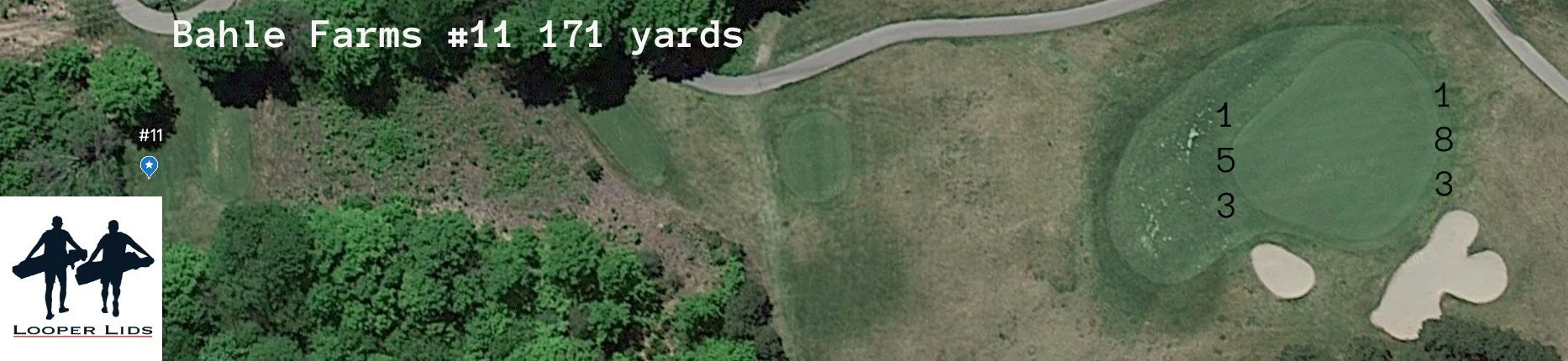
#11 171
Down 57’ tee to green
153/185
The forecast for our Bahle Farms round was sketchy at best, but we had a delivery nearby and weren’t about to skip the chance to play. We lucked out on the front nine with decent weather, but by the time we made the turn, things got pretty miserable. Props to the pro shop, though—they handed us a 30% off voucher for our next round just because we gutted it out instead of bailing for a rain check.
That said, our enthusiasm for the back nine was enough to push through, and #11 did not disappoint.
From the tee, you’re staring at a massive 57-foot drop to the green. My rangefinder gave me 159 yards to the front pin, but with the downhill, it played more like 131. I hit a shot that carries 135, and it ended up 15 feet past—so shoutout to modern tech for nailing the adjustment.
There was zero wind when we played it, but I’d imagine it often plays into a breeze. Here's a tip: downhill + hurting wind = tough calculation. If you’re playing in a 10mph headwind, your ball’s hang time will be long enough that the wind can almost cancel out the elevation drop. That same 159-yard shot might actually play close to its full number. It’s very much a case-by-case decision, but it's something to factor when choosing the correct club.
The green itself slopes front-to-back and right-to-left, so if you miss, long and left gives you a better chance at an up-and-down than short and right.
This hole is a beauty—definitely one you’ll want a photo of—but don’t get lulled to sleep by the view. There’s a lot to consider on this tee shot.
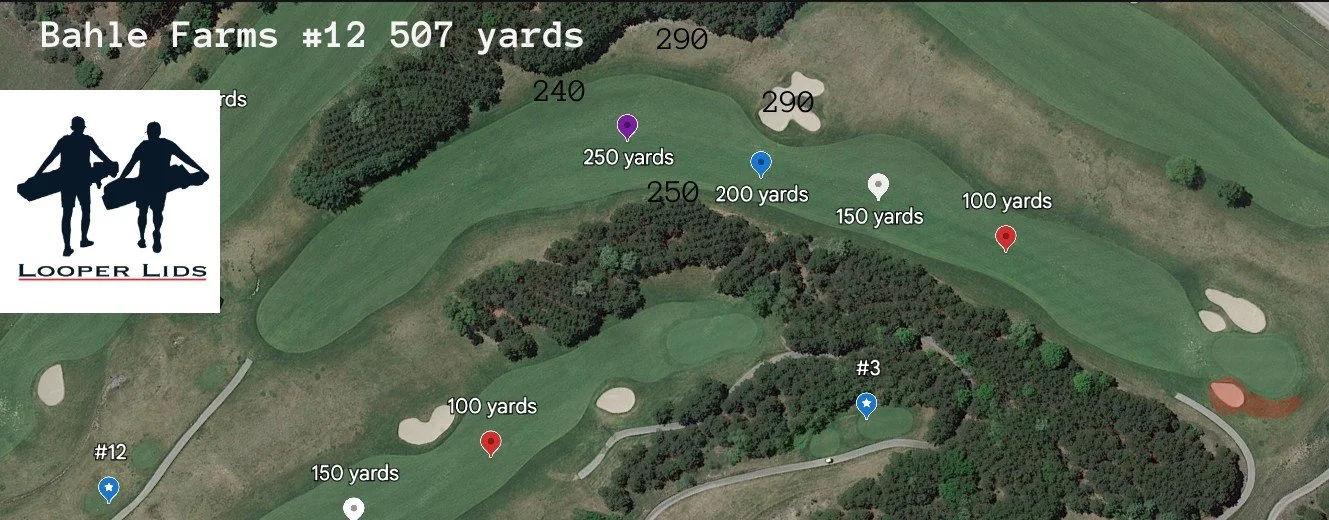
#12 507
Up 64’ tee to green
291 to bunker
240 left trees
Up 14’ from 100, up 24’ from 150, up 31’ from 200 and up 41’ from 250
Fairway slopes right to left
Up 30’ to cut corner
Looking at the scorecard, I saw that this hole is just over 500 yards, so I naturally thought it might be an easy par 5—potentially even reachable in two. What the scorecard doesn’t tell you is that the hole plays 64 feet uphill from tee to green. Even with a great tee shot, you'll be left with a tough lie—left to right and uphill—and needing one of the longest clubs in your bag. It's a very difficult second shot.
Knowing this is most likely a three-shot hole, avoid getting overly aggressive off the tee by trying to cut the corner on this dogleg right. To pull that off, you'd need to carry the ball 250+ yards uphill and over trees—and good luck with that. Instead, tee up on the far-left side of the tee box and aim for the left edge of the far bunker.
The best angle for your approach comes from the left side of the fairway, and it also avoids the worst possible miss: right, into the hardwoods. My goal was to leave myself inside 100 yards, as the fairway is at its narrowest between 120 and 100 yards out.
The green slopes from back right to front left. While the left-side bunkers aren't ideal, they offer a much easier up-and-down than being long or in the right bunker. And don’t forget—add the proper yardage adjustment for the elevated green!
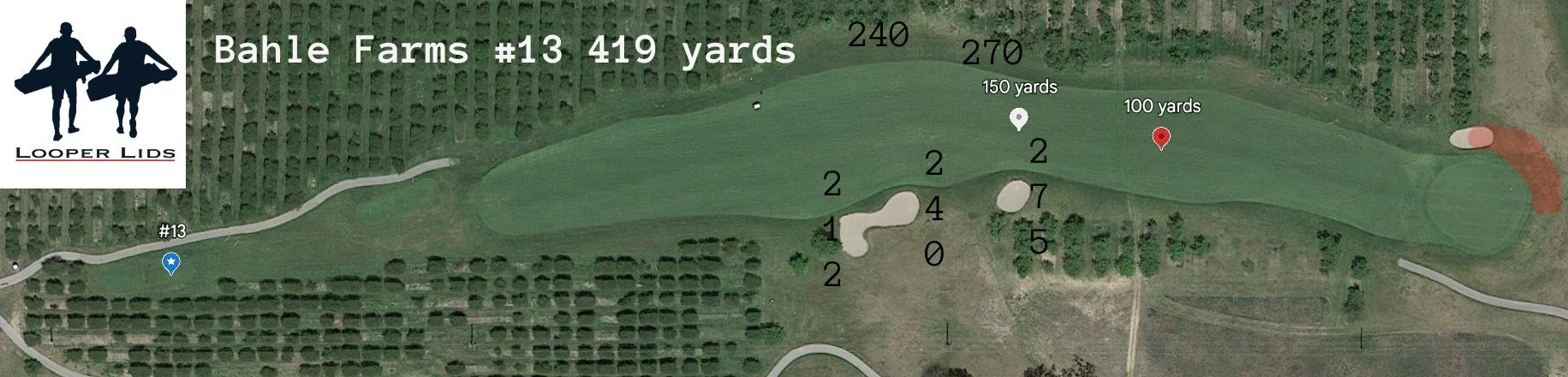
#13 419
Down 9’ tee to green
Right bunker 212/240 & 264/274
Left trees 260-285
The longest par 4 on the course is one of the few holes at Bahle Farms that doesn’t follow the usual pattern of a downhill tee shot followed by an uphill approach. In fact, this is by far the flattest hole on the entire course. But don’t let the lack of elevation fool you—this is still one of the best-designed holes at Bahle Farms.
It’s a slight dogleg right with two nasty bunkers guarding the right side of the fairway. There’s way more room to the left, but that extra space comes at a cost: a worse angle into the green.
The green complex slopes left to right, with a hump guarding the front-left portion. That’s where your approach angle really matters. Coming in from the left side of the fairway, you’ll either hit the front hump and get swatted away like a shot by Dikembe Mutombo, or you’ll land on the backside of the slope and get kicked forward and right. But if you manage to find the right side of the fairway, you can actually use that slope as a sideboard to help hold the green.
Avoid missing left—and definitely don’t go long and left—unless you enjoy straight downhill chip shots. A miss short/right gives you a great chance to get up and down.
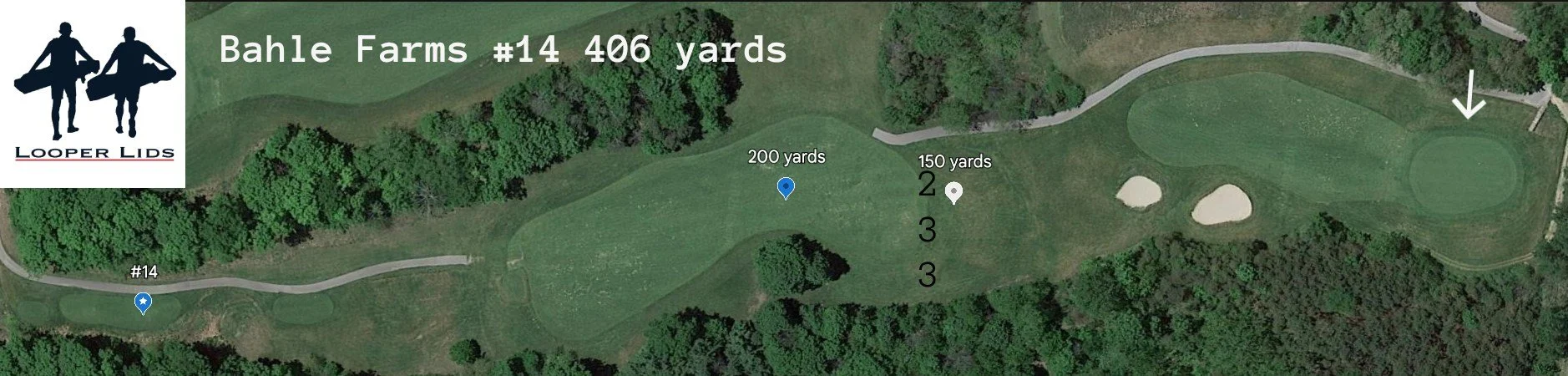
#14 406
233 end of fairway
This was the point in the round where we had to ask ourselves: Do we power through four more holes in the rain, or head back to the clubhouse with our tails between our legs, hoping for a raincheck? We decided to tough it out—and I promptly had one of the worst club slips of my life, somehow ending up in the 16th fairway. Combine that with the fact that this hole is designed to punch you in the gut, and yeah… I didn’t have a good time.
This uphill par 4 plays much longer than the listed yardage, thanks to a break in the fairway at 235 yards. Even with a solid 230-yard drive, you’re still looking at an uphill 175-yard approach. Not fun. Trying to smash a driver over the break isn’t the move either—you’d need a 300-yard carry to clear the ravine and reach the second fairway.
Just like the previous hole, the right side of the fairway offers a better angle into the green, which slopes back-left to front-right. But aiming there is tough, thanks to a large maple tree that overhangs that side of the fairway.
My advice? Remember: this is the hardest hole on the course. A bogey here won’t ruin your round. Play smart—and try to beat the double I made!
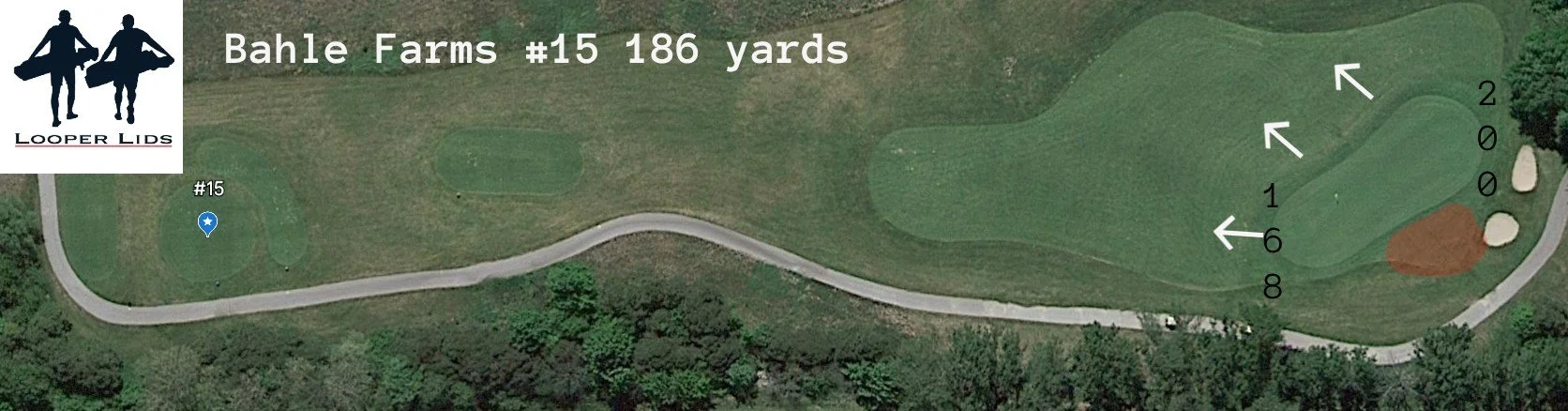
#15 186
168/202
Down 17’ tee to green
I like all five par 3s at Bahle Farms, but the 15th is easily my favorite. From the tee, the green looks smaller than it really is, thanks to a front hump that hides the first half. The green slopes right to left, with the lowest point right in the middle.
Miss right, and you’re left with a downhill chip or bunker shot. Miss left, and the shaved-down slope will trickle your ball even farther left. There’s really no safe bailout, so your best bet is to just commit and find the green.
I love the aesthetics of the shaved edges, and they allow for a variety of creative recovery shots if you miss. It's one of those greens where par-saving becomes a fun challenge, not just damage control.
The tee shot plays about 5 yards downhill, but don’t forget about the prevailing wind, which is usually in your face. The surrounding hardwoods might block you from feeling it, so be sure to check the treetops or nearby flags to get a read on what the wind is really doing.
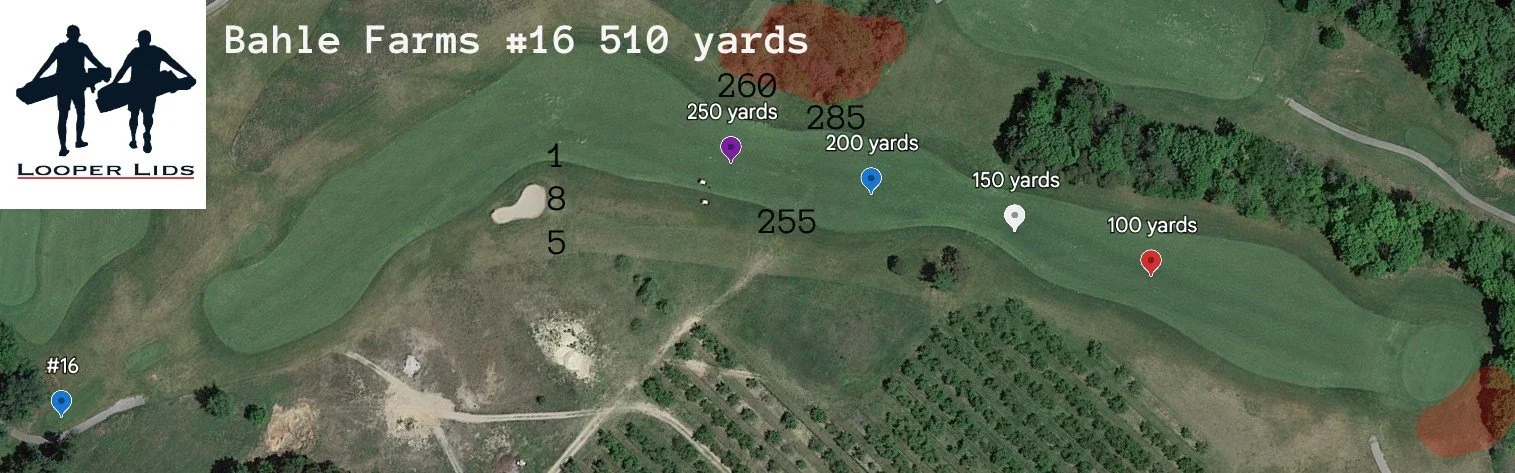
#16 510
270 left trees
Bunker 161/182
Up 18’ from 200, up 7’ from 150,
Thank goodness I mapped out a plan of attack before coming out to Bahle—I would’ve been completely lost on this hole. From the tee, it looks like you should try to hit over the first bunker, but trust me: you run out of room fast on that line. Too far left and you’ll either end up stuck behind a group of trees or deep in the woods—neither option is good.
If you can hit it over 230 yards, you need to aim right of the bunker, and even then, your miss needs to be further right. It’s a hole that rewards discipline, not aggression.
Your second shot is crucial because there’s a lot of trouble to navigate. Just inside the 200-yard marker, the fairway rises quickly to a narrow point—only about 30 yards wide—framed by trees on the right and forest on the left.
If you don’t have a clear look through that window, take a club that lets you carry over the right-side trees—it’s a much safer route. The fairway slopes pretty hard from right to left, so even a good shot can sneak left in a hurry if you're not careful.
The green slopes from front-right to back-left, and the best miss is short. Long or left both fall off and can leave you in rough shape.
Bottom line: don’t try to be a hero on this quirky par 5. One bad swing, and you’re headed straight down a path of darkness.
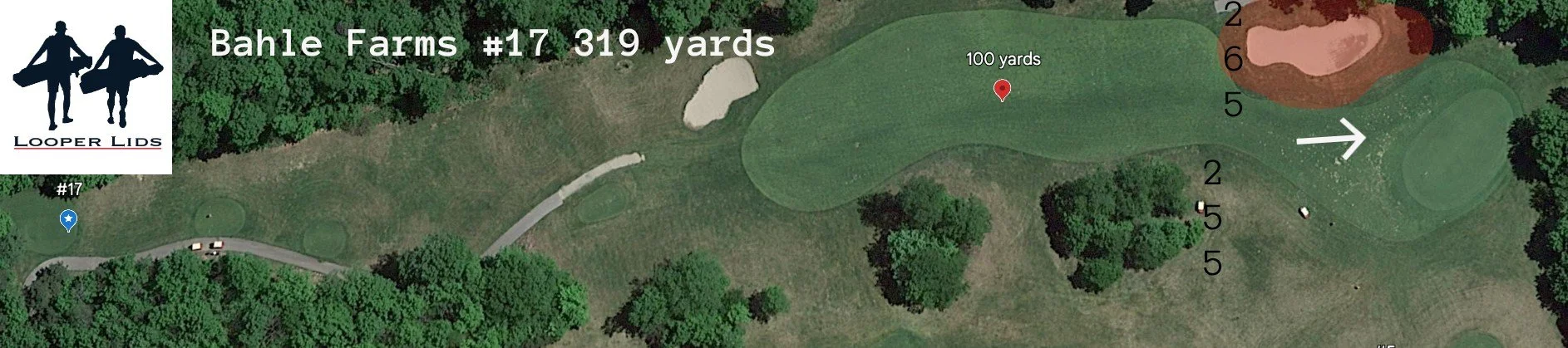
#17 319
260 end of fairway
Up 3’ tee to green
The 17th is a fun, shorter par 4 that actually gives you more options than you'd think when you're standing on the tee box. I tried to play it smart by laying up short of the left fairway bunker at 260 yards, but I didn’t catch a solid tee shot and ended up getting creative from the right trees. Even if I had executed the layup, the angle from short left into this green complex isn’t great.
Beyond the bunker, the fairway slopes steeply downhill toward the green, and anything landing on that downslope will scurry all the way to the back-left corner. You’ve got to carry your approach onto the green to have any chance of stopping it near the pin.
After playing it, I realized just how much better the angle is from the right side, even if that means skipping the fairway entirely. If I’m hitting driver well, my new plan is to hammer one up the right side, toward the 5th tee. The last tree on that line is around 250 yards, but you can go right of it and still be in good shape.
I'm pretty sure this isn't how the designer intended the hole to be played—but hey, let’s bomb and gouge!
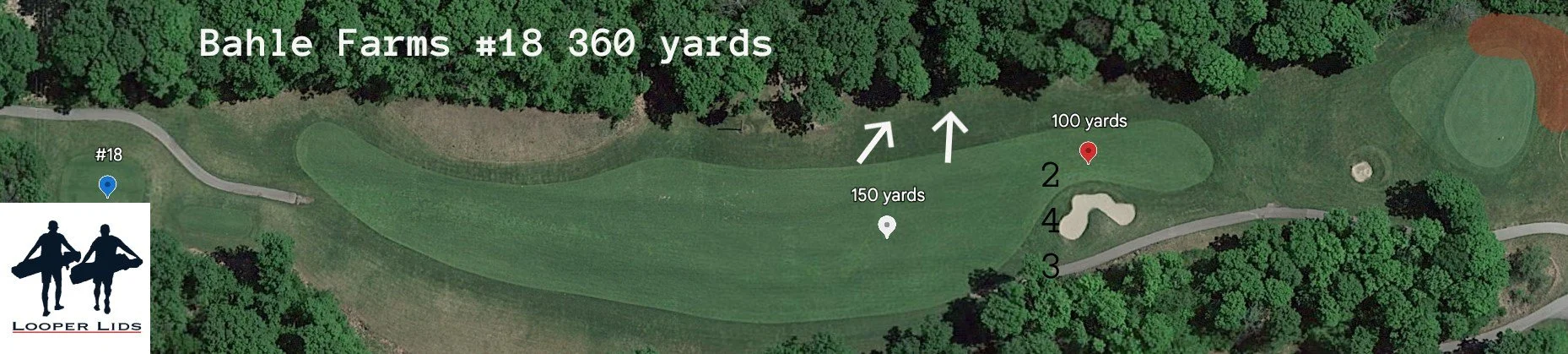
#18 360
243 to right bunker
Up 25’ from 100, up 27’ from 150
The finishing hole at Bahle Farms may be short, but it’s packed with trouble. I got a little too aggressive off the tee—thought I striped one—until I couldn’t find it in the fairway. Turns out, the slope had dragged it straight into the trees on the left.
My advice: don’t hit more than 220 yards off the tee. Anything more and the fairway slope pulls you left, into trouble. Aim for the right fairway bunker and live with a short iron into the elevated green.
From the 150-yard marker, the green sits 27 feet above you. Add 10 yards for the elevation and aim for the left-center of the green. Anything short or right will kick away from the green, and it’s tough to recover.
A miss left will leave you a quick chip or putt, but it’s manageable. Just avoid the big mistakes and finish strong—this hole is all about smart execution.
Conclusion:
One golfer to another—do yourself a favor and make the trip up to Suttons Bay to play this course. It’s a tough track, no doubt, but the shot value is off the charts. Every time I mishit a shot, I felt like I had to run it back just to see if my plan would work the next time.
The course is locally owned and run by people who truly understand the spirit of golf. They even gave us 30% off our next round just because we were the only ones who didn’t quit when the rain came down. I’m not sure if that makes us tough or just plain dumb—but either way, I can’t wait to use that discount ASAP!
-Your hat caddies
