
Course Breakdown: Champion Hill
Champion Hill has been one of my favorite courses ever since I played it in high school golf tournaments. Back then, I knew this course was a blast to play because it was fairly wide open and had a lot of undulations and interesting hole designs. In the last 5 years or so, I feel like this course has received more and more recognition for how great the design really is. I’ve been calling it a discount Kingsley Club for years. The biggest difference is that each course was designed to be played at different speeds. If Champion Hill’s greens were running at Kingsley Club speed and firmness, it would be borderline unplayable. I would absolutely love to see the carnage it could bring, but for everyday golf, the greens should be around an 8 on the Stimp.
I will be breaking Champion Hill down from the blue tees. As always, I’m not afraid to give constructive criticism, and I think we need to add another tee box or combine tees to create a more accessible option. On the scorecard, the blue tees are nearly 6900 yards, which is a lot of golf for the vast majority of players. The next longest tees are the whites at 6100 yards. I feel like a tee box around 6450 yards would be a perfect stepping stone between championship length and near-senior tees. I don’t think I’ve ever seen the blue tees set up to approach 6900 yards, but I do think an additional tee box is necessary.
Unlike our last couple of courses, there aren’t as many areas where you have to avoid trouble. A bomb-and-gouge strategy works quite well here. You do want to avoid the rugged fescue grass, but if you can find your ball, it is usually playable.
If you haven’t played Champion Hill or if it’s been a few years, I strongly suggest you take the trip out to Honor, Michigan—especially after reading this breakdown!
CH #1
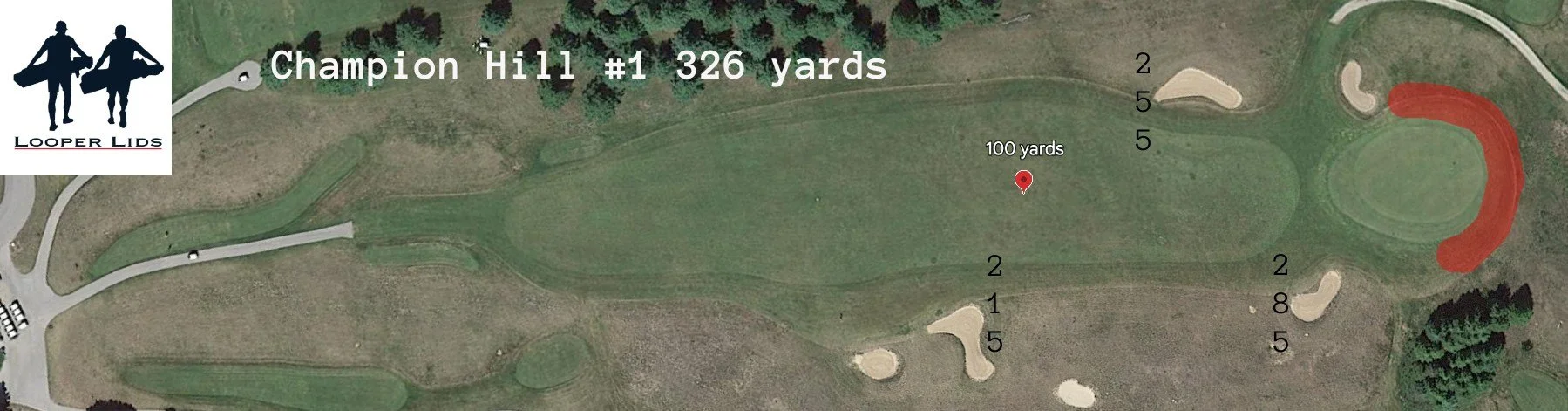
The 1st hole at Champion Hill is a near-perfect starting hole according to the philosophy of Greg Lueck. “A starting hole should be the easiest hole on the course. You want the 1st to be a warm-up hole and allow groups to move along quickly to maintain proper spacing,” he preaches. Whether or not you agree with the philosophy, this hole is the easiest on the course at only 320 yards from the blue tees.
The fattest part of the fairway is between 215 and 255 yards. For those just trying to find the fairway, lay up short of the left bunker at 255 yards. For those feeling a little frisky, favor the right side of the fairway, and you’ve got room until a bunker at 285 yards. It isn’t necessary, but sometimes you just have to smash the driver.
The green complex slopes from right to left and drops off beyond the green. Long of the green is where you definitely don’t want to miss!
CH #2
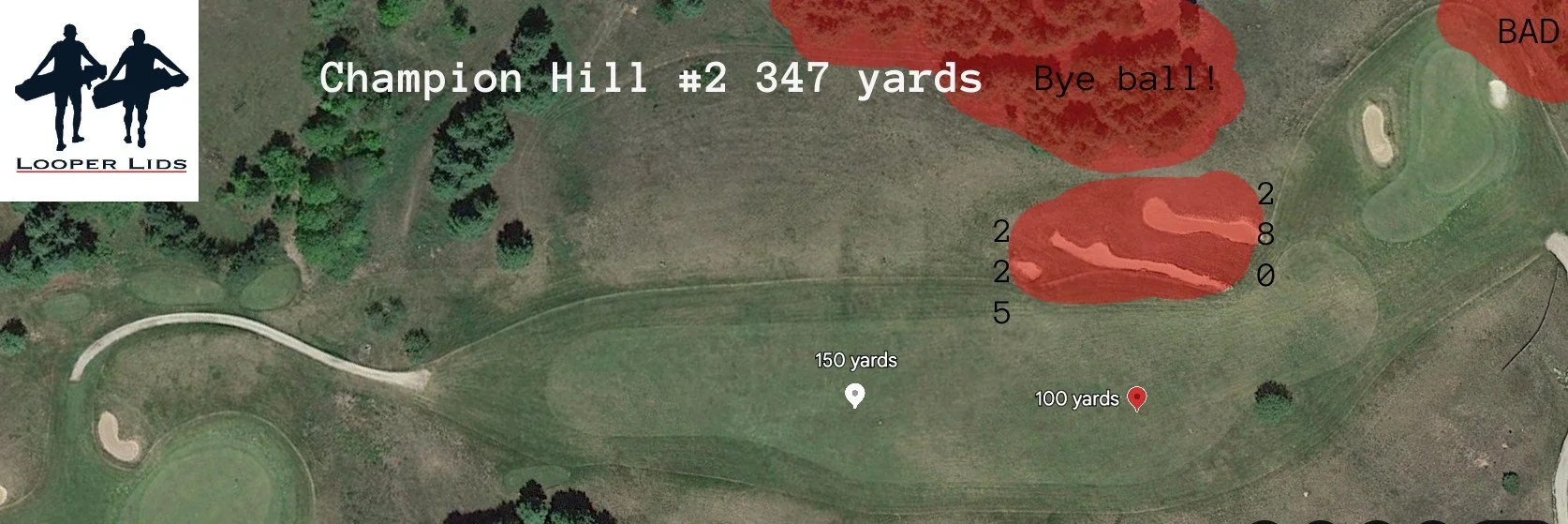
The second hole might be my favorite on the entire property. While it doesn’t have the stunning views of some of the other best holes, the design itself is excellent. This dogleg left tries to entice golfers into making a poor decision off the tee. Usually downwind, the thought of trying to carry the left bunkers to hit a tee shot greenside can creep into your mind. This, however, simply isn’t the percentage play.
Even if you manage to carry the left bunkers (280 yards), the green complex isn’t very welcoming from this angle and will require another REALLY good shot to execute. The smart play is to aim your drive at the right tree (280 yards). With the total hole being only 350 yards, you don’t need to hit driver, but I also don’t think there’s anything wrong with using it as long as you stay right, due to the angle of the green. The right side is simply so much more inviting for approach shots.
The miss to this green complex is short and right. You don’t want to be in either bunker, and if you happen to miss long, the terrain runs steeply down into a ravine—not where you want to be!
CH #3
Up until the last few years, I always played the white tees when I played here because that’s what the rest of my group preferred. Now, I prefer to play the farther tees, and this hole was eye-opening. I didn’t even know where the blue tees were or how to get to them, and when I finally found them, I had to race back toward the fairway to figure out where I was going because I was completely lost.
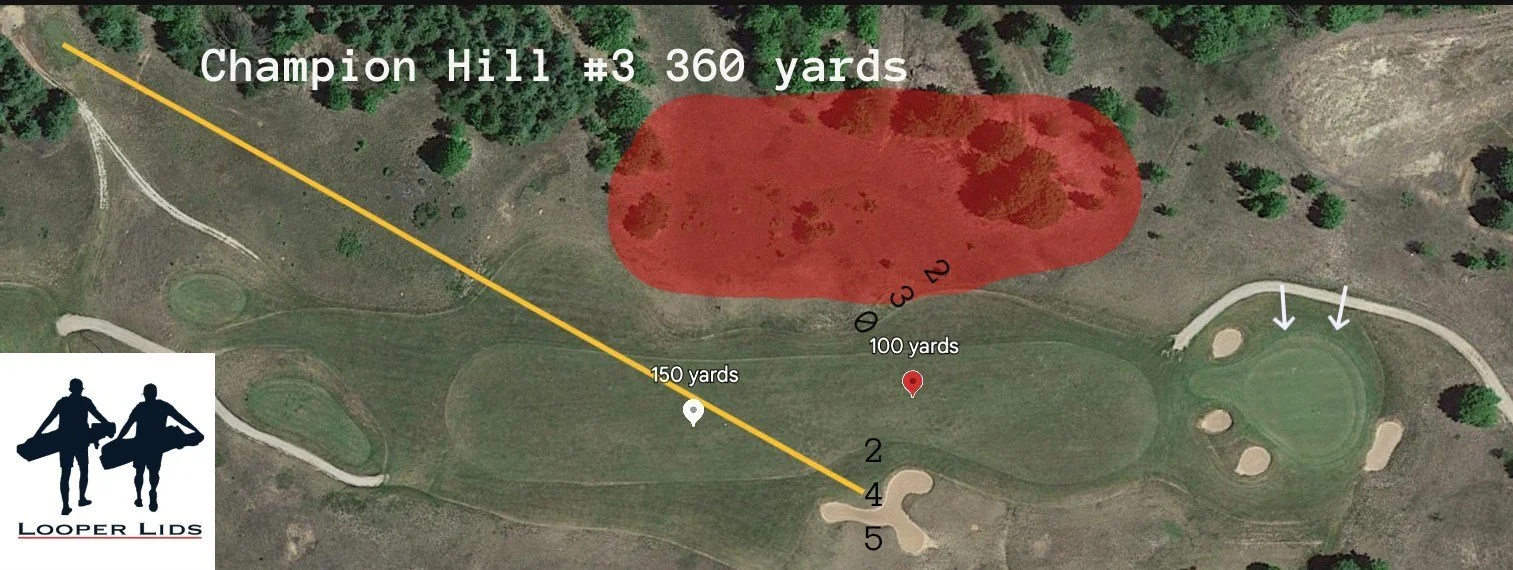
Luckily for you, you’re reading this, and I’m going to tell you exactly what to do! The tee box sits 60 feet below the level of the fairway, and you're completely blind to an angled fairway. All you can see are some bushes on the hillside. If you split the right and left bushes, there’s a bunker through the fairway at 245 yards. With the uphill, this plays closer to 270 yards.
You can aim left of this line and try to get past the bunker, but you're bringing the risk of missing left into play. From the overhead view, you’ll see this area is marked red—for good reason, because you don’t want to be there at all! A good aggressive line is just left of the left bush, but on this line, you’ll need to carry the ball at least 230 yards to clear this red-marked area. Risk/reward!
My plan is to hit a 250-yard shot over the left bush, hoping to leave myself around 125 yards remaining. This eliminates the bunker miss without bringing the left miss too much into play.
The entire hole climbs up to the green, with a 150-yard shot playing 24 feet uphill (add 8 yards), and from 100 yards, it’s 12 feet uphill (add 4 yards). The green complex slopes from left to right, and you can see some pretty crazy bounces from left to right, so don’t be afraid to favor this side of the green.
CH #4
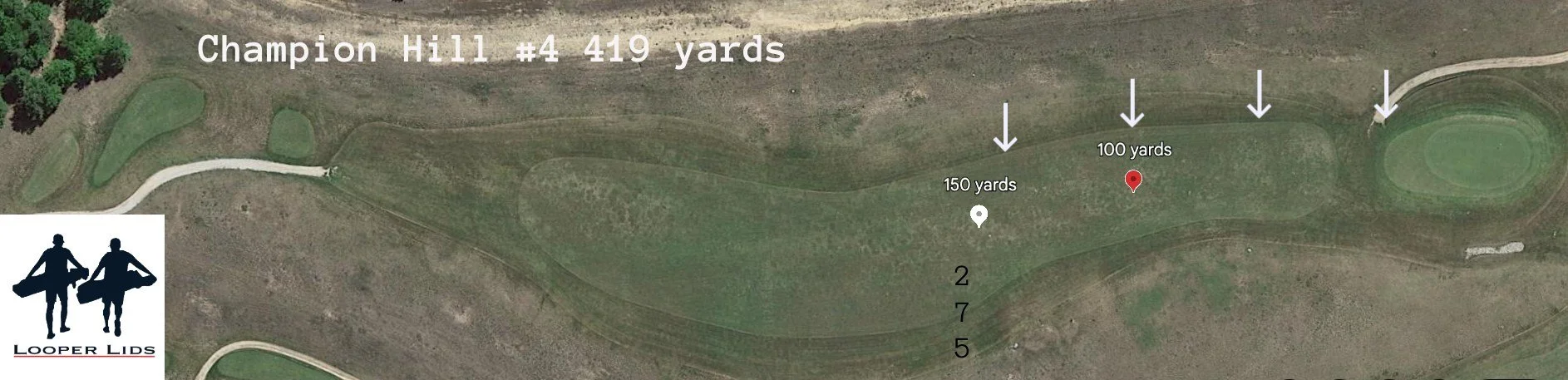
One of my favorite tee shots on the entire course, this hole just sets you up to try and wail on one! This longer par 4 doesn’t have much trouble other than the fescue grass, so this breakdown will be short and sweet.
For the bombers out there, the fairway begins to tighten up around the 275-yard mark. Even if I’m bringing this into play, it isn’t worth hitting a shorter club off the tee. Personally, my misses get tighter with a shorter club when hitting approach shots, so on the risk/reward spectrum, this is worth the risk to me.
The last third of the hole slopes pretty hard from left to right as it creeps toward a hillside. A miss to the right is probably better than left, just to avoid getting an awkward lie and to be able to chip into the upslope instead of the downslope.

We go from one of my favorite tee shots to my absolute favorite tee shot with the par-5 5th. From tee to green, this hole drops 78 feet. Combined with how short the hole is to start (445 yards as the crow flies), this is a birdie hole with hopes of getting a big birdie (eagle, sorry I’m a nerd).
The tee shot is sneaky tough. As mentioned, it plays way downhill, and the most direct route to the green has a giant hill and fescue area starting at 255 yards. Any shot going further than 255 needs to be aimed more left, because you really don’t want to be on this hillside. Interestingly, from the 255-yard mark, you’re only 190 yards from the green, though you wouldn’t be able to see it.
The further you hit the ball down the fairway, the more the fairway slopes off to the left and away from the green. You essentially aren’t getting any closer to the hole, but your angle and vision improve the further you hit the ball down the fairway.
If you’re forced to lay up, you want to try to hit your shot up the left side of the fairway. I haven’t mentioned it yet, but the green complex is the hole’s major defense, and the left side of the fairway gives you the best angle of approach to this green.
On your approach, expect your ball to land and kick left. Because this hole is shaped around a giant hillside, it’s hard to see or feel how severe the green complex is, as it appears flat compared to the rest of the landscape. Using Google Earth, I calculated that the entire green complex sits on a 6% right-to-left slope. It doesn’t sound like much, but the general rule of thumb for pin locations is that they shouldn’t sit on any slope above 3%. There isn’t a spot on this green that is less than 3%.
The real decision when hitting your approach is how aggressive you want to be aiming up the right-hand side, knowing this information. If you aim too far right and stay above the slope, you’re looking at an impossible recovery shot. Or you could aim at the middle of the green and live with the potential of missing left, but leaving yourself in a position for an easy up-and-down. These decisions are what make or break a round of golf.
It goes without saying that this green breaks a lot. When I read a putt on this hole, I basically double how far I think it’s going to break. If it looks like 3 feet, I’ll play it 6.
CH #6
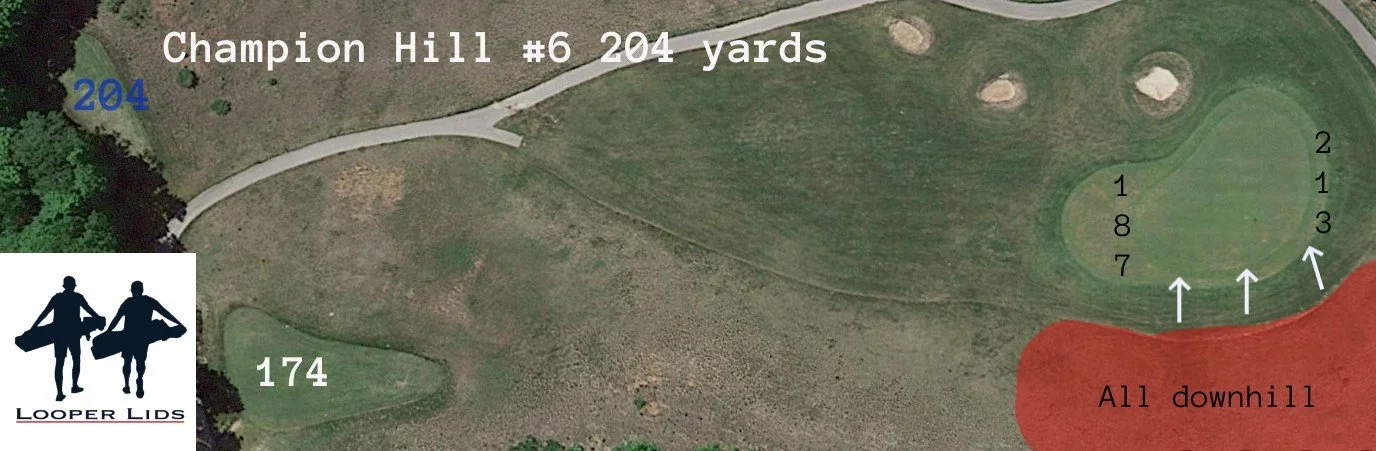
If you’re crazy like me and prefer to walk rather than take a cart, the walk from the 5th green to the 6th tee will certainly get your heart rate up. Hard to believe this is one of the shorter par 3s at about 200 yards, but welcome to Champion Hill!
The front part of the green is protected by a false front. Once you get past the slope, the green complex runs from right to left. I’ve seen some good bounces off the right slope, but more often than not, the ball will settle before reaching the green, leaving you with an awkward downhill chip shot.
Don’t be afraid to take a little extra club on this hole. I’ve noticed that you can’t feel it from the tee, but once you reach the green, the wind is usually into your face.

CH #7
The par 5s at Champion Hill are some of my favorite holes. This downhill tee shot gives you a lot to look at, but the important thing is to not miss left. Left will continue to go left, and that’s no bueno on this hole. As long as your shot ends up left of the cart path, you shouldn’t have an issue hitting through the fairway on the right.
Reaching the green in 2 is a tough feat. From the 200-yard marker, this shot plays uphill 34 feet (about 11 yards) and is typically into the wind. With a miss long being better than short, a 200-yard shot could easily play more like 225 yards.
When trying to locate the green, use the big house as your landmark. From the 250-yard marker, the middle of the green is at the left corner of the house.
For those laying up, be sure to stay short of the left bunker. This bunker is 30 yards short of the middle of the green. Like on hole #5, the further left you are on your layup shot, the better angle you’ll have into this green.
The green complex is designed like a horseshoe. The back corners steeply slope from back to front, and the front left portion is like a catcher’s mitt. Just know that any uphill putt will be slower than you think.
CH #8
I know I shouldn’t start every hole breakdown by saying “great hole,” but man, this hole is great! From the elevated tee box, you can see Lake Michigan, which is about 6 miles away, and even the Sleeping Bear Dunes, which are about 20 miles away.
Once you’re done checking out the view, it’s time to lock in because you have to hit a good shot here—otherwise, you’ve got an uphill battle to save par.
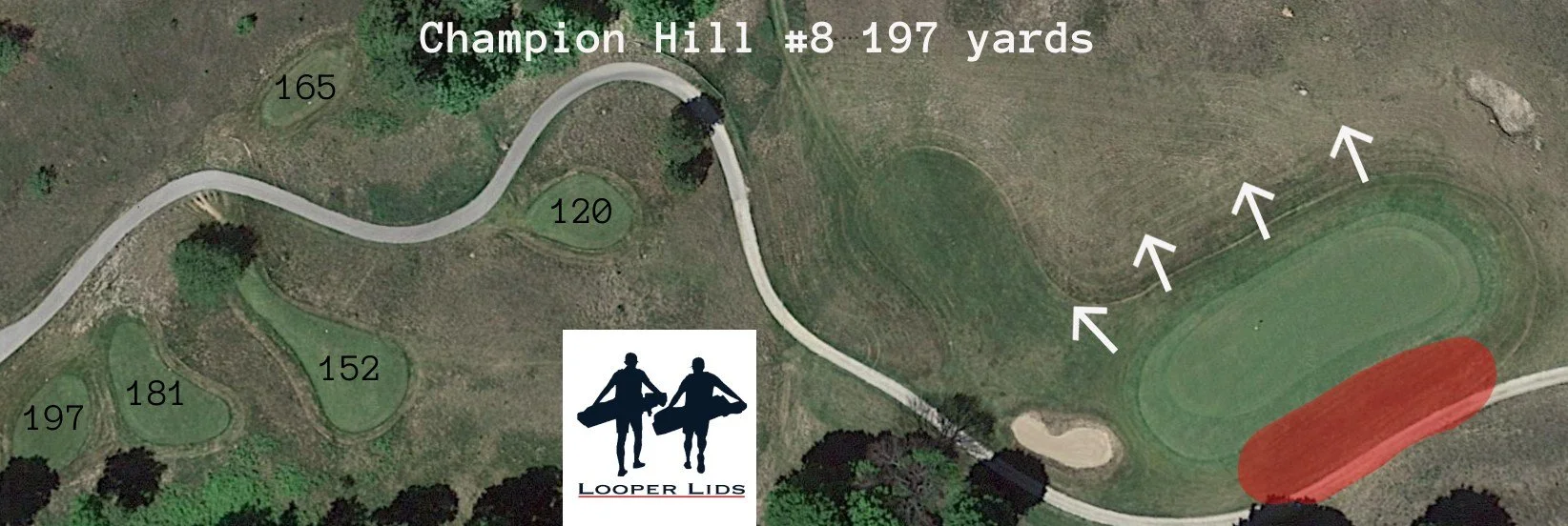
I typically see the blue tees at the 180-yard tee box, but there is another box back around 200 yards.
The green is about 20 feet below the tee box, so that’ll instantly take off about 6 yards of distance you need to account for. The long and narrow green is perched on a hillside, with the left side falling off dramatically. You have some relief to the right, but the up-and-down from that side is very, very touchy. A mis-hit chip could end up off the green to the left if you’re not careful, and I'd say most players should be using their putter from here.
As you can imagine, the green rolls from right to left, and there can be some really hard-breaking putts. Make sure to look at your putts from behind the ball towards the hole, from behind the hole towards your ball, and give it a look from the slow side. This method should show you all the information you need to know.
CH #9
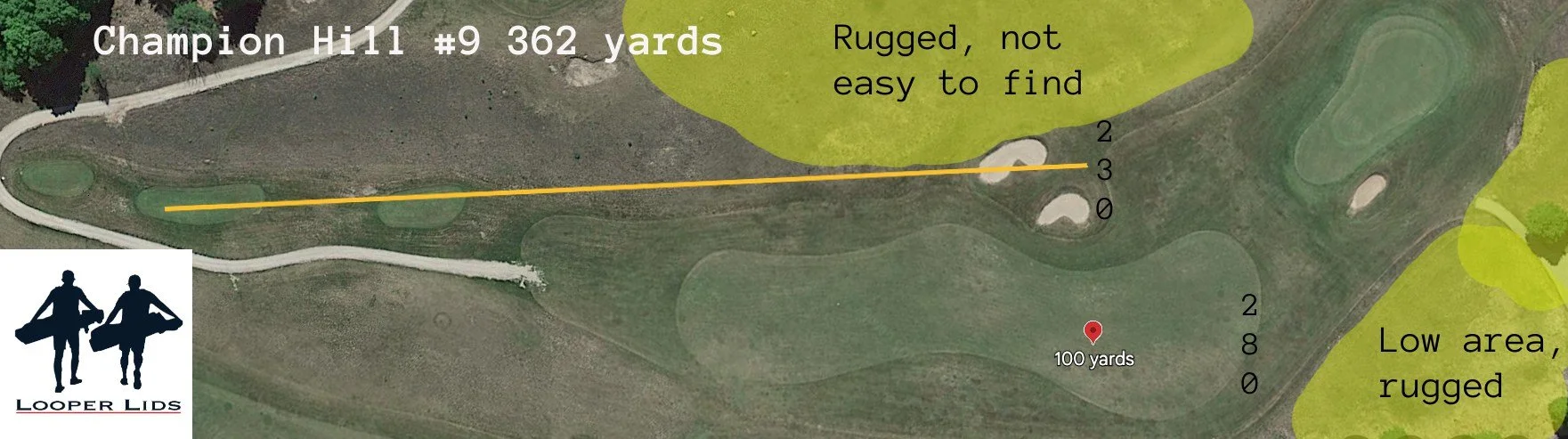
This short par 4 is a friendly way to end the front nine. I usually see the blue tees one box up from the back tee, so that’s where I’m measuring from. This hole requires you to make a decision off the tee. As the crow flies, this hole is just over 300 yards. To go for the green, you aim over the left bunkers, and it needs to carry at least 230 yards.
The risk here is a miss left, which could be problematic, or you might get lucky in the fescue. You also run out of room on the right and risk going into that fescue as well (280 yards). Alternatively, you could choose to aim right of the bunkers and use the fat part of the fairway. The decision is whether to get aggressive and hit driver over the bunkers, or hit a ~240-yard shot down the middle and live with less than a full wedge remaining.
Years prior, I would pull out my 5-wood and just try to find the fairway. This year, I’m hopeful that my ball striking has improved, and I’d love to rip driver here. It’ll be a game-time decision depending on my tendencies that day.
The green complex is pretty small and generally slopes left to right. You’d rather miss right than left for your par save.
CH #10
This might not be the highest handicap hole, but I’d cast my vote for it as the hardest hole on the golf course. From the blue tees, the tee box aims you way left and blocks the right side of the fairway with trees encroaching into your sight line. I’ve really struggled to hit this fairway in recent memory, and trust me when I say this hole is tough enough from the fairway.
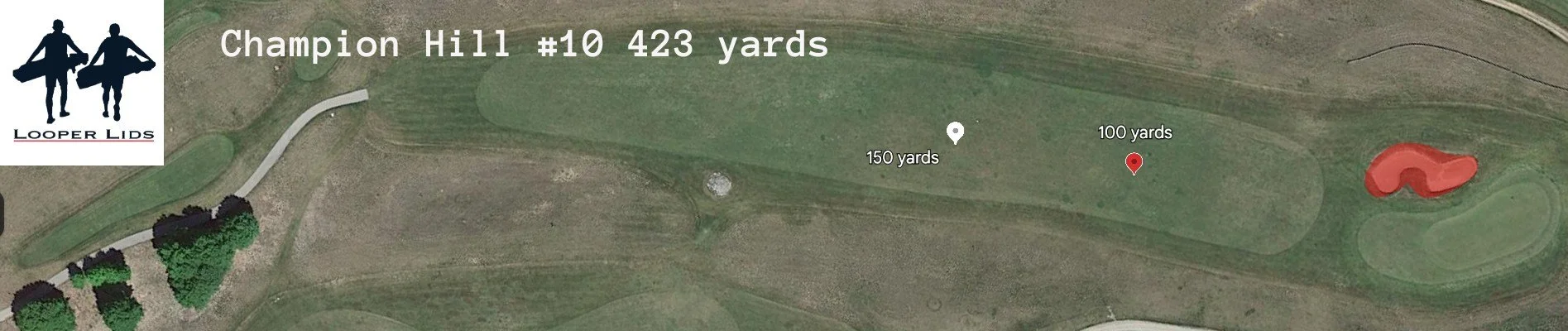
This hole plays about 40 feet uphill from tee to green, so we’ll need to play our approach shot longer than the rangefinder reads. From the 150-yard marker, add an additional 9 yards and from 100 yards, add 6 yards for the uphill.
The area to avoid on your approach shot is the left bunker. This bunker is deep and sits well below the green surface. Take note that it extends 10 yards into the green. With this in mind, aim well right, and if there’s a front or center pin location, make sure your miss is long to eliminate the risk of this bunker.

CH #11
This long par 3 will usually play shorter than the scorecard distance. I’ve played it all the way back, and it really isn’t much fun. Typically, the distance is around 185 yards. The hole plays slightly downhill, but I don’t think I’ve ever missed long. I’d attribute this to the general wind direction, which is usually hurting from the left.
You really want to avoid missing short or left. The green slopes from left to right, and it’s a difficult up-and-down. If you end up short, there’s just a lot of trouble that can make life tougher than it needs to be.
CH #12
I can’t lie, this might be my least favorite hole on the entire course. I can 100% confidently say that it’s a me issue and not the hole’s fault. I had a traumatic event here in the summer of 2022 and still haven’t recovered.
After a mediocre drive, I had 150 yards from the middle of the fairway. I intended on hitting a smooth 8-iron and then proceeded to hozzle-shank six straight shots in a Tin Cup-esque manner. It was just me and Michael playing, and after shank #3, he could be found rolling around on the ground, laughing at me. I managed to find my first ball in the left fescue and can’t remember if I saved bogey or not, but I can tell you every now and then I wake up sweaty in the middle of the night with flashbacks to this moment.
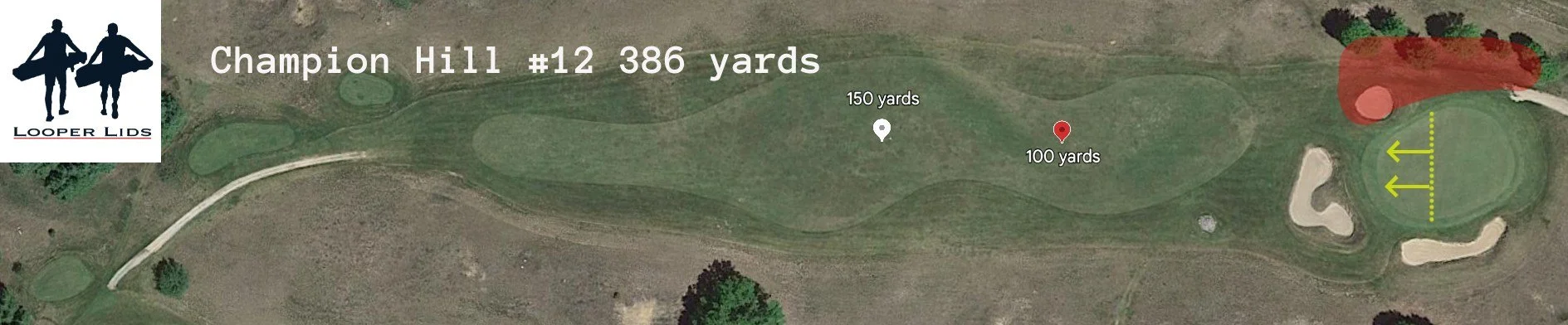
The hole itself is pretty solid! It’s not the toughest driving hole, but the approach shot has changed a bit in recent years. The green used to be much larger. The overhead image I’ve been using is actually from 2015, when the green was full-sized. They’ve turned the front edge into fringe to make the false front a little less severe. The dotted line shows how the green looks now.
When hitting your approach shot, make sure to add an additional 8 yards for the 24 feet of elevation from the fairway to the green. This applies to both the 100- and 150-yard ranges. With the aforementioned false front, you’re better off long than short, so don’t be afraid to play your shot even longer. Be careful when missing left of the green. The cart path isn’t far, and anything left of the green kicks further left.d
CH #13
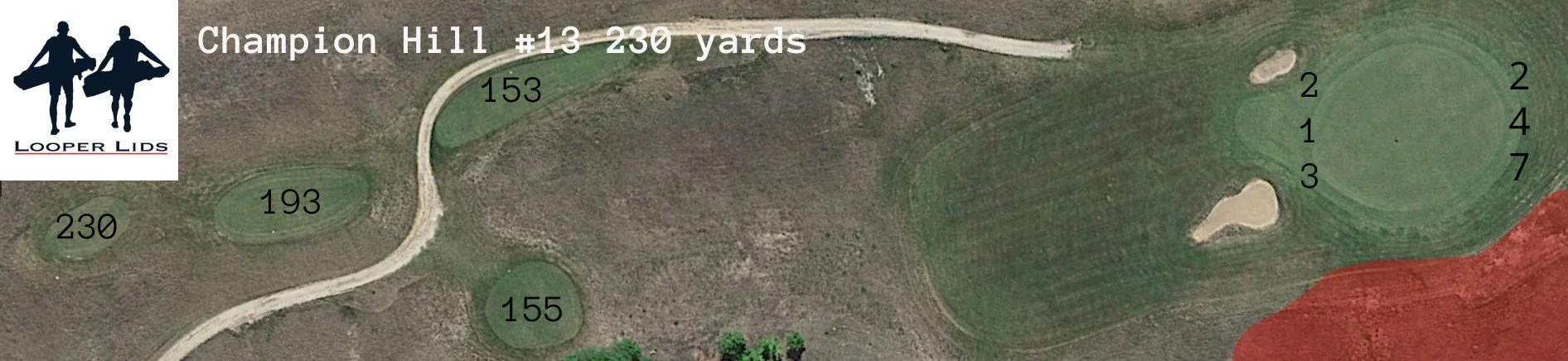
The final par 3 at Champion Hill follows the trend of being long and difficult. The blue tees can stretch back to 230 yards, but generally speaking, I see them use the ~190-yard tee box more often than not. Even from here, this hole usually plays into the wind and requires you to hit a quality golf shot.
The front left and right bunkers are golf ball magnets but aren’t the worst places to miss. You’ll want to avoid missing right, though. As you can see in the overhead, once you get right of the second cut, the fescue area slopes down and away from the green complex. The fescue in this area is lush, and finding your ball can be a struggle. Even if you do find it, your ball will land on a downslope.
The green itself is pretty straightforward. The front half is relatively flat, while the back half slopes steeply from back to front and offers a decent backstop. I’ve never seen the pin on top of this backstop, but I think it’s possible. If they do put the pin back there, it would be VERY difficult. I’m all for it.
CH #14
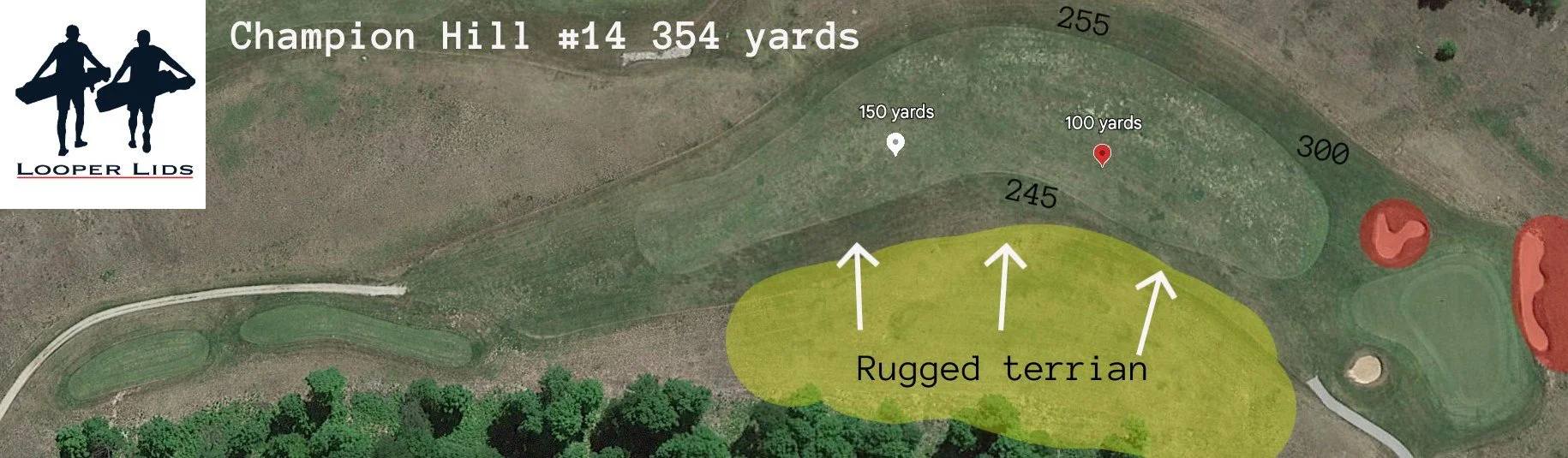
One of my favorite things about Champion Hill is how they weren’t afraid to get creative with the topography. This hole is a perfect example. From the tee to the 100-yard marker, the land drops 45 feet, creating a semi-blind tee shot. Once you get to the bottom of the fairway, you’ve got 10 feet of elevation back up the hill to a perched green complex. It’s just fun.
The dogleg-right fairway forces you to think about your club choice off the tee. You can run out of room in the fairway at about 255 yards on the left side. To utilize the right side of the fairway, you need to carry a shot of 245 yards to fly the fescue rough. With the downhill in mind, I usually hit my ~240 shot off the tee. This likely keeps me short of the left rough while giving me a chance to clear the right fescue. With the elevated green, I prefer to have a full swing into it, and the best angle is from the left side of the fairway.
Play an extra 5 yards or so into this green, because the worst miss is short in the front bunker. There’s a 5-foot lip on this bunker, and getting out of it can be a real challenge. If you take my advice a little too far and end up in the back bunker, consider using your putter to roll the ball out—there’s no lip!
CH #15
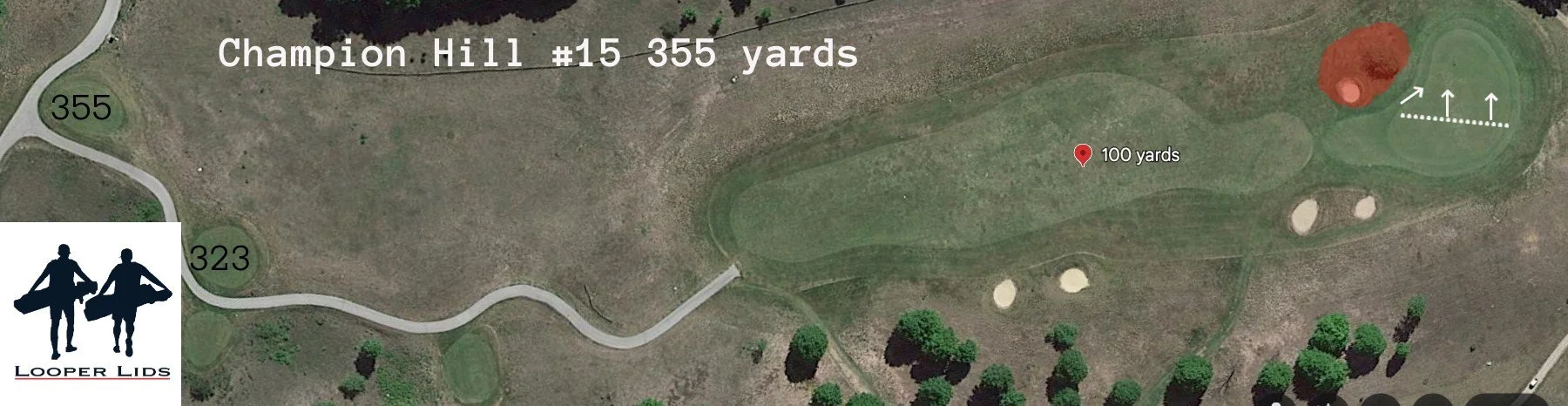
I can’t remember if I’ve said this already, but I think this is my favorite hole. The downhill par 4 (75 feet from tee to green) does everything it can to tempt you into blasting driver as far as you can.
The most interesting aspect of this hole is a greenside apple tree that blocks about 20% of the left corner of the green. It’s more of a mental challenge than a physical one. Generally speaking, I hate trees in the field of play on golf holes, but for some reason, it works on this hole. I believe it’s because it isn’t in play every day, but if the pin is tucked behind it, you can see it from the tee and adjust your strategy accordingly.
When the pin is tucked left, I’m more inclined to hit less than driver to ensure I can get enough height on my shot to clear the tree if I miss further left than intended. The fairway bottlenecks at 280 yards, so with that left pin, I will hit a 230-yard shot to stay short of the tightening fairway.
The green complex has an elevated shelf on the right and a lower left shelf that’s protected by the apple tree. No matter where the pin is, you don’t want to get too close to the front left bunker or the apple tree. So, if you plan to smoke driver, a miss to the right is better than left.

CH #16
Probably the most straightforward hole on the course. This is the #1 handicap, and I’m not sure I agree, but it is a tough par 4. For the first time in this breakdown, this hole is completely flat! From the blue tees, the left rough creeps into the fairway starting at 275 yards, so just be careful there. This rough area drops a few feet from the fairway and is usually the thickest rough on the course.
The green complex slopes from right to left and slightly back to front. If the pin is in the back, just know that the putt from the middle of the green tends to be slower than I’d expect it to be.
CH #17
Unlike any golf course I can think of, Champion Hill finishes with back-to-back beasts of par 5s that can make or break your round. I can recall days where I finished strong and saved my round, and others where I completely blew it on these two holes and ruined my entire day.
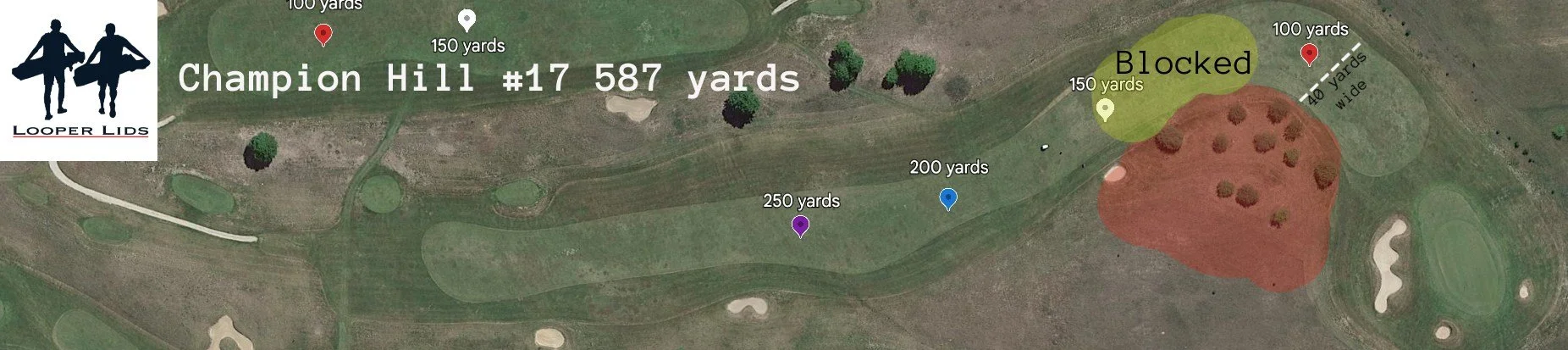
The card lists this hole at 585 yards, but I usually see it from the ~560 box. What makes this hole so interesting is that the first ~350 yards are dead straight, and then the hole curls around an apple orchard with a dozen or so trees.
I have to imagine that average to below-average golfers really struggle on this hole. With a good drive up the right-hand side, I usually have an opportunity to reach the green in two. On a straight line, the hole is only ~520 yards. Most golfers aren’t able to do this and must hit a layup shot while navigating the apple orchard.
From 150–120 yards from the green, a golfer can get blocked out by the orchard if they’re just a little too far right. So, your options are to either stay short of 150 yards or try to hit past the orchard, which is a pretty tight window. For example, if you’re at the 250-yard marker, you’d need to hit a layup shot at least 185 yards to bypass the orchard, but you must stay short of 225 yards to avoid hitting through the fairway.
The green complex is probably the flattest on the course, sloping from the front-left corner to the back-right corner. Avoid the bunkers, and anywhere else is a decent place to get up and down from if you miss the green.

CH #18
The final hole is a long par 5 that gives players an opportunity to do something they haven’t been able to for the first 17 holes... hit their ball into water! I can promise you, a large number of players make good use of this opportunity.
The tee shot is fairly wide open. You’d rather miss right than left. In the battle of pine trees versus fescue, fescue should always be your preference.
This hole really gets interesting once you’re inside 150 yards. At the very shortest point, the left water is 135 yards from the hole. Keep this in mind, because I think most golfers should purposefully lay up short of that 135-yard mark to eliminate the water as a potential miss. Normally, I’m not this cautious with water, but the fairway leading up to the water slopes toward it, and I can’t tell you how many times I’ve seen shots that looked safe, only to trickle through the fairway and end up in about 2 feet of crystal clear water. I always tend to be more annoyed when I can find my ball in the water vs it being gone forever.
I can’t imagine ever going for this green in two. Even if I were playing up a tee box and hit a great drive, I’d probably still lay up. Your only bailout is to the right. Right means fescue, where you’re essentially playing Russian Roulette with your lie, and the angle from the right side isn’t ideal either.
The green complex slopes from the front-right corner to the back-left corner. Because of the angle of the green, your ball will land and kick forward and left. One bad bounce, and you could be in the water. From the left side of the fairway, the green is like a perfect catcher’s mitt for approach shots.
Conclusion:
I think I’ve gushed over this course enough throughout this breakdown for you to get the picture of how much I love it. Champion Hill isn’t a course that I’d deem as difficult, but it has a way of sneaking up and biting you in the butt. There aren’t many courses where the level of “fun” can even come close to rivaling what you’ll find here. I don’t know the name of the person responsible, but I’ve heard that this place was shaped by one guy with nothing more than an excavator. If he ever gets to read this, all I have to say is, “thank you.”
-Your hat caddies
