
Course Breakdown: El Dorado
Introduction:
What’s fun about doing these breakdowns is seeing how diverse Northern Michigan's topography and course design can be in such a condensed area. The course we’ll be breaking down this month is El Dorado in Cadillac, Michigan. El Dorado is well-known for its incredible course conditions and manicured greens. We just finished breaking down Champion Hill, which is almost the complete opposite of El Dorado. Champion Hill is wide open with not many trees in play. It plays firm but not fast, and thank God, because the topography features crazy elevation changes. El Dorado, on the other hand, is a tight, shorter course with trees everywhere. The course is much more inland than Champion Hill and is built on a swamp instead of sand dunes. The conditions are on the softer side, but the greens are usually lightning quick.
Each course tests different parts of your game, but at the end of the day, it’s all about finishing 18 holes in as few shots as possible, so let’s dive in!
This breakdown will be from the Power tees, the second longest set of tees. El Dorado’s website states they’ll be posting a new scorecard soon, but these tees seem to play just under 6400 yards. Just note that all measurements were done from the white star on each hole.
#1
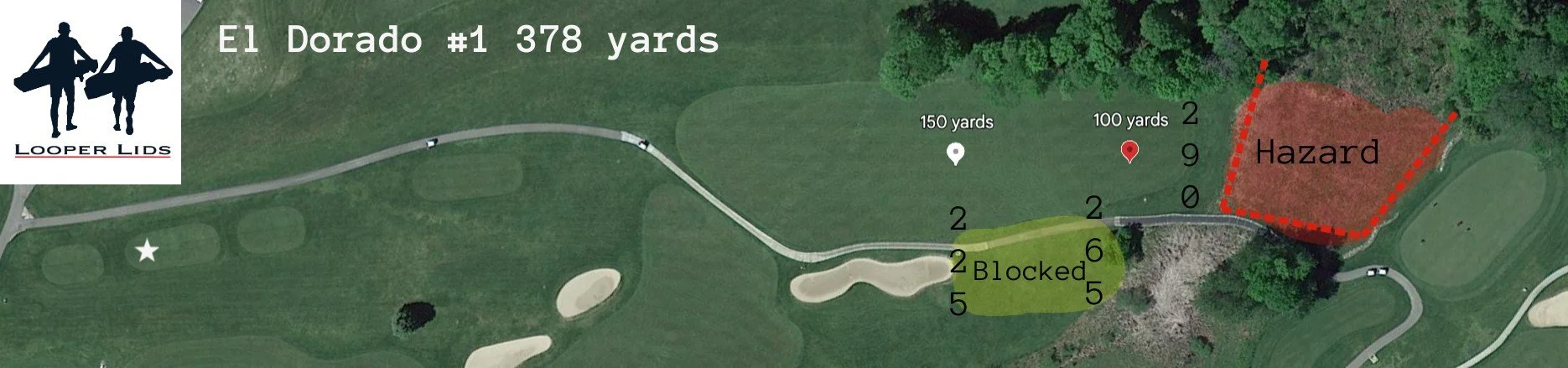
The opening hole at El Dorado does a pretty good job of foreshadowing what’s to come in the next 4 hours. Trees line the left side of the narrowing fairway, with a single bunker on the right side. To fly over this bunker is 225 yards, but that leads straight into trouble. There's a large tree at 265 yards off the tee that blocks your view of the green. It's crucial to hit the fairway on this hole.
I almost never hit my driver because of how much the fairway tightens. From 150 yards out, the fairway is 43 yards wide. But from 100 yards out, the fairway shrinks to 30 yards wide. I'd say the ideal distance to hit off the tee on this hole is 240-250 yards.
The approach shot requires you to carry over a hazard area that runs right up to the green. Don’t let this get in your head—the green is massive, and there's plenty of room long. You’ll have a downhill putt/chip, but that’s much better than coming up short into the water.

#2
The uphill par-4 second hole is arguably the easiest on the course. As you can see from the overhead, the fairway is a bit unusual. The tee box sets you up to aim at the right bunkers, but there’s plenty of room left. Left gives you a better angle into the right-to-left sloping green.
Since this is a shorter hole, you don’t necessarily have to hit your driver. The fattest part of the fairway is between 210 and 240 yards, leaving you around 100 yards in. That being said, I usually hit driver.
Don’t be afraid to play your approach shot a few extra yards for the uphill, and I believe the prevailing wind is into your face. The worst miss is short and left, so keep this in mind when choosing your club.
#3
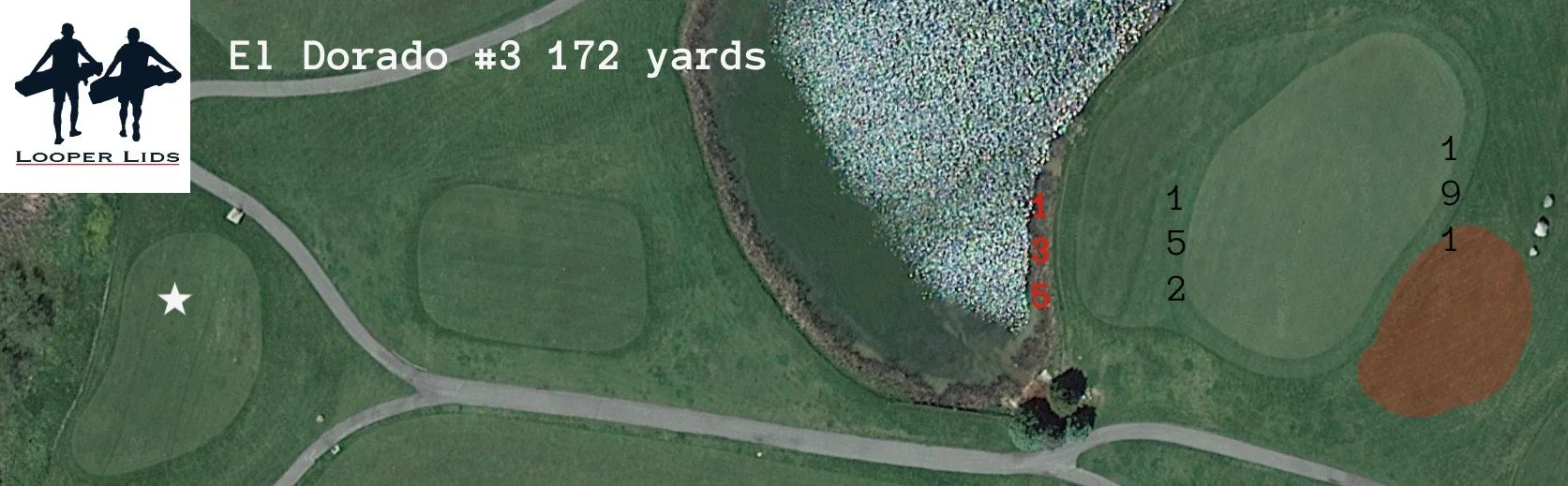
Oh no, more water to hit over! Even though I get my ball airborne 98%+ of the time, there's just something uncomfortable about carrying a shot over water. Fortunately, from 175 yards, you only need to carry 135 yards to avoid the water.
This green is massive and slopes from the back middle to the edges. You don’t want to miss long or right for this reason. When I was first starting to golf, I remember aiming into the 9th fairway to avoid hitting over the water. It seems silly now, but I really didn’t want to lose my Nike Mojo ball.
#4
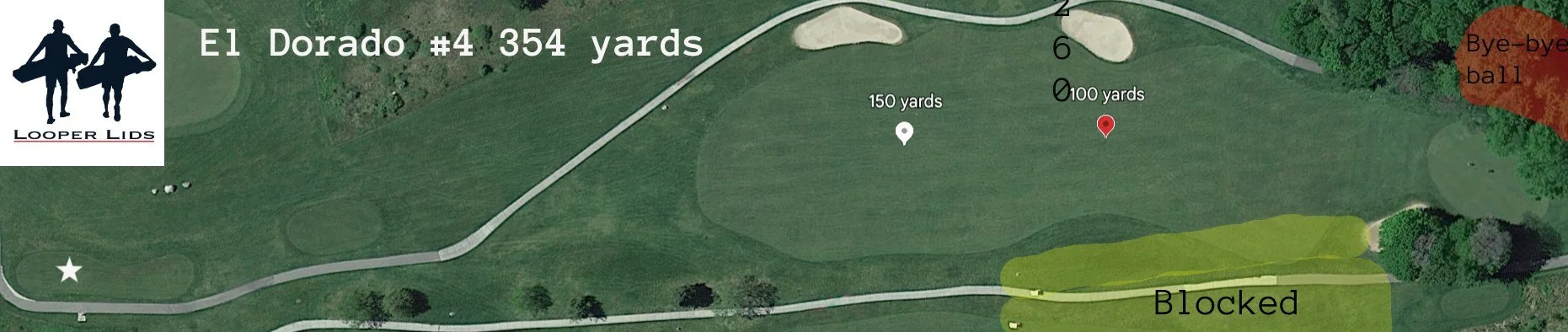
The 4th is a beautiful golf hole. It subtly tightens as you near the tucked-away green, and the fairway slopes downhill the entire length. Like the 1st hole, you don’t need to hit driver, and the fattest part of the fairway is between 200 and 250 yards off the tee. I usually hit my 230-yard club off the tee, hoping to find that fat spot. Even hitting it past 230 can create more trouble due to overhanging trees short and right of the green. You can be in the fairway and not have an angle into the green because of these trees.
On the approach, avoid missing left. Just off the green, the terrain slopes away towards dense trees and bushes. The best miss is short, but even the right bunker isn’t a bad place to be. This green has a few random slopes but shouldn’t give you too much trouble.

#5
The 5th hole is one of the toughest on the entire course. It’s not long at 330 yards, but it makes you feel uncomfortable. Trees line both sides of the uphill fairway until about 210 yards. The left side opens up to the range, and the right side slopes toward a hazard area. To reach this area is 245 yards. If there’s one tip you need to remember from this course breakdown, it’s this: When checking into El Dorado, take note of what color balls they use for their range. Don’t use a yellow ball on the 5th hole if they use yellow range balls. Bad news.
My strategy has been to blast driver to get past the left trees and essentially aim into the driving range. This isn’t a great plan, though, because there are moguls that separate the range and 5th fairway. You'll either have a blind approach or a very awkward lie.
Next time I play here, I’m going to hit my 3- or 5-wood, depending on the wind. My goal is to get past the cart path and stay short of the water on the right.
The green has a slight false front with a tightly mowed fringe. The general slope goes from the back-left corner to the front-right corner of the green. There’s no bad spot to miss, just avoid short-siding yourself depending on the pin location. Add a few extra yards for the uphill and watch out for some tough wind!

#6
I don’t know about you, but when I see a par 5 listed at 460 yards, I get a little pep in my step. As I’ve become wiser, I know that a par 5 this short must have plenty of trouble, and that’s certainly the case on #6.
The tee shot has you hit through a shoot of trees that starts 120 yards from the tee box. At this point, the shoot is 32 yards wide. This tee shot can be intimidating, and it forces you to hit a straight shot to get through the shoot. As long as you make it past the shoot, the fairway widens to about 45 yards. There’s more room left than it looks, but from the left side of the fairway, your angle to the green is blocked by a giant tree. The fairway ends at 290 yards. When you add the 35 feet downhill and the prevailing wind behind you, I usually hit less than driver—typically my 230-yard club. There’s some junk right at 265 yards that I try to stay short of to make my landing area as wide as possible. The further right you are, the better your angle for the next shot.
With a decent drive, you have an opportunity to hit this green in two. The green is only 18 yards deep, and missing long is bad news. Short isn’t a great miss either, but I’d rather have an awkward chip shot than be searching for my ball in the woods beyond the green.
If you’re forced to lay up, make sure to get over the creek but stay short when the fairway narrows. Try to lay up between 95 and 130 yards. Purposely hitting a shot that leaves you inside 100 yards with no chance of reaching the green is doing yourself a disservice. You’ll either have tree troubles on the left or be stuck on the grassy hillside on the right.
The green slopes slightly back to front and right to left. It’s one of the flatter greens on the course. Long and left are the bad misses.
#7
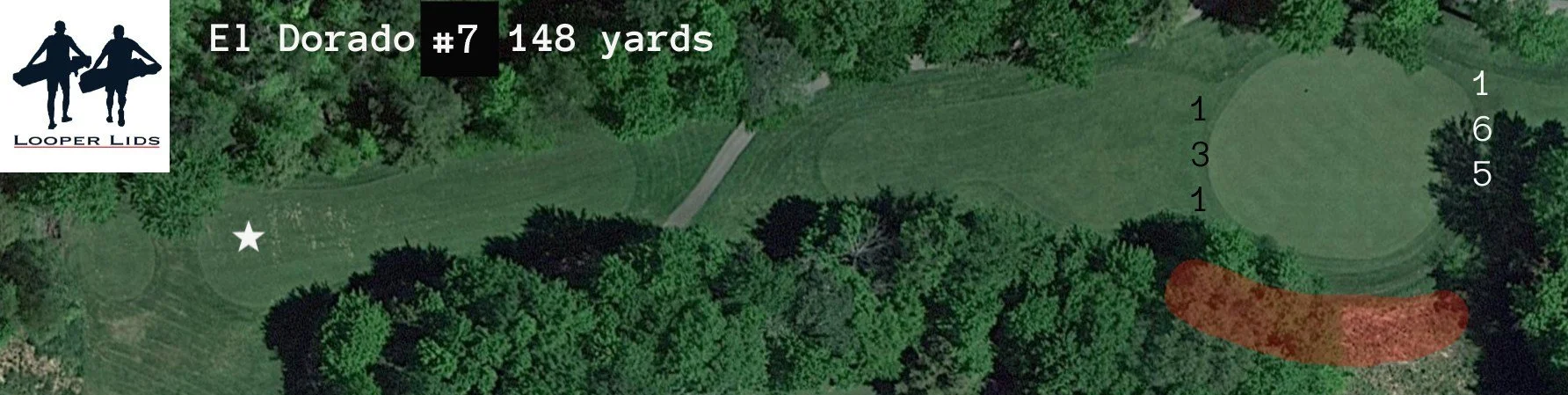
The par 3 7th is another hole that requires a straight, if not left-to-right, shot to access the entirety of this green. Depending on where the ground crew places the tee markers that day, you could have a semi-blocked angle to reach the right side of the green. I’m not a fan of this, and a little T.L.C. could clean it up, but we are up for the challenge!
Usually playing around 150 yards, this hole demands a quality iron shot into this oddly flat green. I say "oddly flat" because I don’t remember it being that flat, but according to Google Earth, the elevation of this green is between 1300–1301 feet.
With the way the tee box is set up, you’re more likely to miss left. I know this because I do it almost every time I play this hole. There are usually two different outcomes I’ve encountered. The first is that you avoid the trees and cart path, and you’ve got to hit a low chip shot under the trees and onto the green. The less ideal situation is when your ball hits the cart path and launches left toward the skinny 8th tee box and the hazard area a few paces beyond it. A left-to-right shaping golf shot is ideal for this hole.

#8
When I do these breakdowns, I like to figure out what single hole represents the entirety of the golf course the best. I think #8 is my winner. The short par 5 is riddled with trouble but is completely fair as long as you don’t test your luck, which is how I feel about the entire course.
From the tee, you get a great view of the hazard that engulfs the entire left side of the hole. A few trees up the right side keep you from hitting your tee shot too far right, but they do give a bit of a claustrophobic vibe. The widest part of the fairway is between 200 and 240 yards (48 yards wide). The fairway then narrows to 275 yards (24 yards wide) before it widens again for your lay-up shot.
Now that you’ve got the info, I’m sure you’re not surprised when I tell you that I usually don’t hit driver here. A good 5-wood puts me at the fattest part of the fairway, and I don’t tempt myself to try and go for the green in two.
From here, your safest play is to lay up to the fattest part of the fairway, around 150 yards out. I like to get a little more aggressive because, more often than not, I’ll only need a 130-yard lay-up shot to get to my desired lay-up area, about 120 yards out. This part of the fairway is a little narrower, but I still feel confident I can keep it in play.
The green complex might be the most difficult part of this hole. It slopes dramatically from back to front. If you’re above the hole, chances are the best option is to just putt the ball completely sideways and pray it stops near the hole. I can recall a week when I played this course twice: one time, I hit a shot that landed pin-high, then spun off the front of the green into the rough. I managed to get up and down for par. Woo! The next day, I purposely played a little longer to account for the pin, and when the ball landed, it plugged in the fringe just beyond the green. I had to place my ball and, from there, had to putt straight downhill to the hole and ended up three-putting for bogey.
Moral of the story: don’t get greedy and miss long!
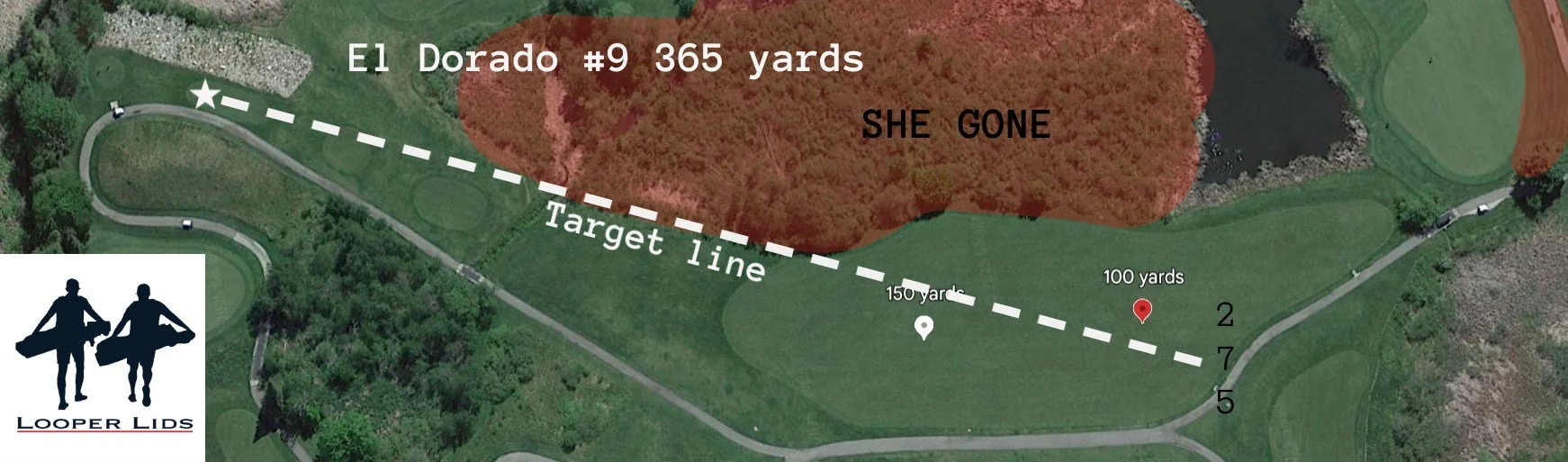
#9
The course opens back up for the front nine’s finishing hole. This dogleg left par 4 is a good opportunity to end your front nine on a positive note.
The tee shot is semi-blind, but you can see so much room to the right. I think the target line is the right edge of the left tree, which is essentially the middle of the fairway. The fairway ends at 275 yards on that line, but I’d say most can hit driver without hesitation. I personally hit my 3-wood here to stay short of where the fairway narrows around 260 yards.
A tree can obstruct your view of the green if you’re on the right side of the fairway, but it shouldn’t be in play as long as you get the ball airborne.
The green complex is very similar to the previous hole in that the green is really pitched from back to front. The green can drop as much as 8 feet from the back edge to the front edge. Don’t you dare miss above the back edge, but anything landing in the back half of the green should scoot right back toward the center. An uphill putt really helps your odds of leaving yourself a gimme on your next shot.
Stop by the club house and load up on snacks/drinks! El Dorado gets a +1 for keeping Reeses and Snickers in the fridge. One of the best snacks on a hot summer day.

#10
The back nine starts with a straightforward par 5. There’s no trouble off the tee as long as you keep it on the planet. The lay-up shot doesn’t require much thought either, but you do have some bunkers on the right that come into play starting at 110 yards from the hole. If you’re going to lay up, I’d suggest staying short of this distance because the entire fairway slopes from left to right, and a slight miss to the right could lead you straight into bunkerville.
If you're considering going after the green in two, be aware of the severity of the green’s slope from left to right. Expect a bounce to the right, but any shots that land left of the hole need to be carefully maneuvered to avoid hitting through the green. Sadly, it’s easy to do—especially if the pin is in the front-right position. A miss to the right is a better angle, but the terrain is so steep right of the green that it makes for a tough chip shot. The green complex is certainly this holes major defense.

#11
This is one of the coolest tee shots on the course. The hole offers the most elevation change on the course, with a 33-foot drop from tee to green. The fairway is at its widest between 235 and 260 yards from the tee, but I usually hit my driver here. There’s a tree about 270 yards from the tee box, and if you don’t get past it, it will impede your angle toward the green on the left side of the fairway. In my eyes, this is a tough tee shot with any club, so I want to try and get as close to the green as possible.
You’ll have a downhill lie for any shot inside 120 yards. With your worst miss being long, don’t be afraid to aim for a distance closer to the front half of the green—especially with a back flag.
The green slopes from back to front and doesn’t offer too many pin locations. I usually see it on the back flat spot or in the front corner. If it’s in the front, be cautious of the false front.

#12
The 12th is a tough son of a gun. From the Power tees, this hole plays just under 200 yards and requires golfers to carry the ball at least 180 yards to clear the hazard area. Not only does your shot need to carry 180 yards, but it also needs to fly pretty straight to avoid the trees on both sides. I really struggled with this hole as a kid, mostly because I thought I hit the ball further than I actually did. I can recall my dad telling me to aim for the back bunker. Once I did this, my issue of missing short seemed to go away. I’d vouch that as solid advice for everyone. Can’t argue with the idea of missing long if the trouble is short!
Like most of the greens at El Dorado, it slopes from back to front. I wish I had more tips and tricks for this hole, but it’s one where you just have to execute. And if you don’t, take your drop and fight for that bogey.

#13
Going into this breakdown, I was the most clueless about what the best strategy for success on this hole is. I’ve hit anything between a 5-iron and a driver here and haven’t had much success with any of them.
The uphill tee shot leaves you somewhat blind, but you can certainly see the trouble. The right trees continuously cut into the fairway until they end 245 yards from the tee box. There’s a pond behind these trees at 270 yards. Trees line the left side until 170 yards, where it opens up into the next hole/teeing area. The issue is that beyond these trees, the terrain is very undulated with moguls. I’ve hit over here and been completely fine, but I’ve also had situations where I could barely make contact with the ball. Russian Roulette is not a good game to play on the golf course. Not to mention, the angle from the left to the green complex is not ideal for success.
It’s really easy to say, but I think the play is to hit a shot 210–220 yards and aim for the left-center of the fairway. This leaves a wedge into the most steeply sloped green on the course. Plus, the left side doesn’t get too severe until you’re past the 220-yard mark.
Since we’re talking about the green, it’s crazy. It’s 28 yards in depth, and within that 28 yards, it drops 8 feet from the back edge to the front. This creates an average slope of about 7%. Make sure not to miss long or left on your approach. Don’t worry about the pond short-right; there’s plenty of rough to keep your ball from rolling into it if you come up just short of the green. That’s a much better option than flirting with missing long.
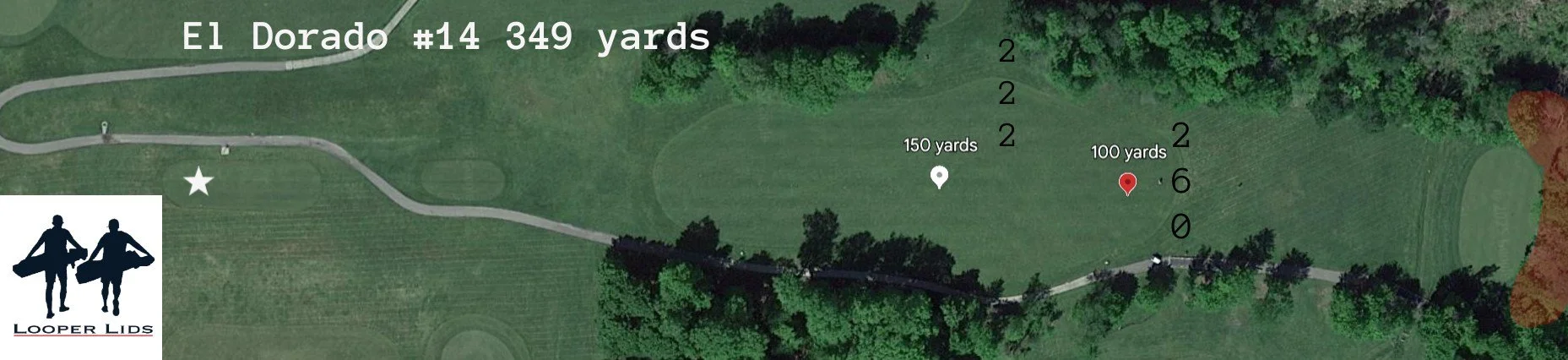
#14
Man, I’m just talking about the 13th green, and I’m a little sweaty. Luckily, the 14th hole is a bit more tame. This downhill tee shot narrows the fairway more and more until it ends at 260 yards. The widest part of the fairway is between 200 and 220 yards.
This hole plays downhill and usually downwind. I plan on hitting a 210-yard club in hopes of leaving myself around 130 yards or so.
The green is much wider than it is deep, so it puts a premium on distance control. The back-to-front sloping green means you’ll prefer a miss short versus long.
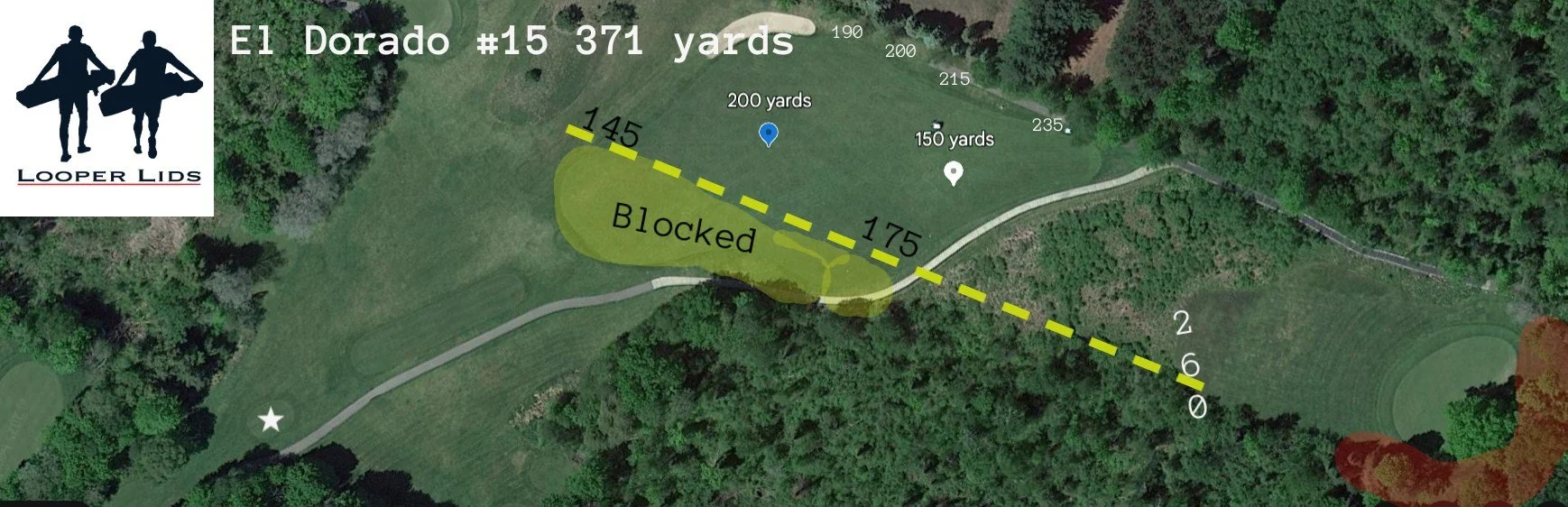
#15
I’m starting to realize there’s a relationship between how much labeling/coloring/etc. I have to do on the overhead and how much I enjoy a golf hole. At some point, it’s like, “Whoa, there’s a lot going on here.”
This quirky hole fits the mold pretty well, but we’re here to strategize, not critique! Most golfers should not be removing a headcover when selecting a club for their tee shot. I’ll be hitting my 190-yard club next time, and I’m really confident in that. This keeps me short of any trouble through the fairway, and as long as I hit it solid, I’ll have a mid-iron into the green—and you can’t really do any better than that. Ideally, I’d hit a left-to-right shot that starts at the middle of the fairway and bleeds toward the cart path.
The green slopes from back to front and is the steepest in the center. There’s almost a ridge right in the middle that pushes balls toward the outer edges of the green. Any putt from one side of the ridge to the other will break extremely hard off that steep center slope. Anytime I walk away with a par on this hole, I’m extremely happy.
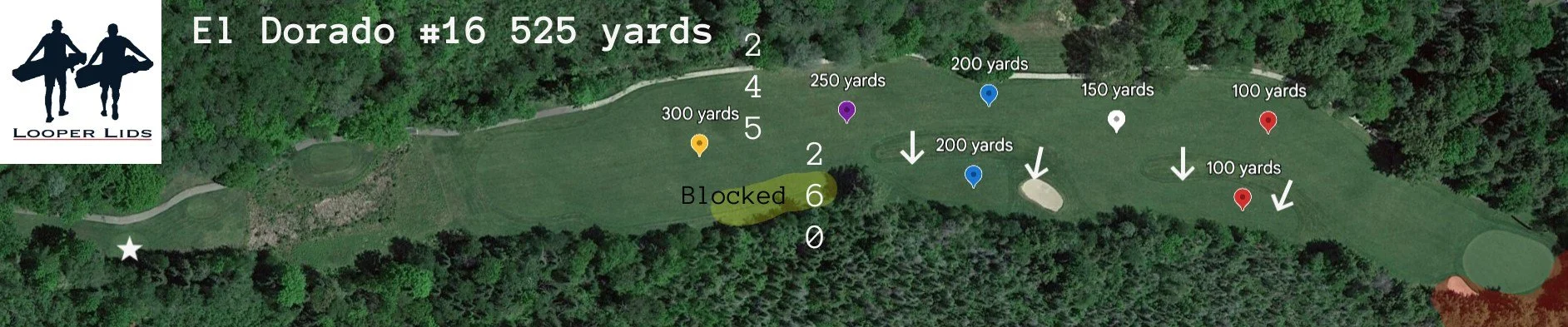
#16
There was a summer—maybe 2019—when every time I played here, I quit this hole before I had a chance to finish. It’s long, tight, and just requires really good swings. Apparently, I was lacking the good swing part that year.
The tee shot gives you plenty to look at, but we’re aiming for the left-center of the fairway. I tend not to hit driver here because the widest part of the fairway is shy of 245 yards. I have enough trauma from previous rounds that I don’t press my luck and just try to make par. With a shot of less than 245 yards, you need to make sure not to get stuck behind the right tree at 260 yards. I swear, this tree is batting .1000 every time I’ve tried to hit a curveball around it.
The fairway is cut in half by thick rough and moguls, and the right side drops about 5 feet in elevation. The right side is technically a better angle, but the left side is level with the green complex. The worst-case scenario is getting stuck in one of these grass moguls. Yes, you’re reading that correctly—the worst thing you can do is hit a shot perfectly down the middle.
The vision I have for this hole is a 230-yard drive that leaves me around 300 yards out. From there, I’ll hit a 200-yard shot, trying to stay left but short of the trees coming into play. After that, I’ll have roughly 100 yards remaining. A hell of a plan, but fingers crossed I execute!
The green complex slopes from back to front and right to left. You’d rather miss left than right on your approach. Too far right, and you can kiss your ball goodbye.
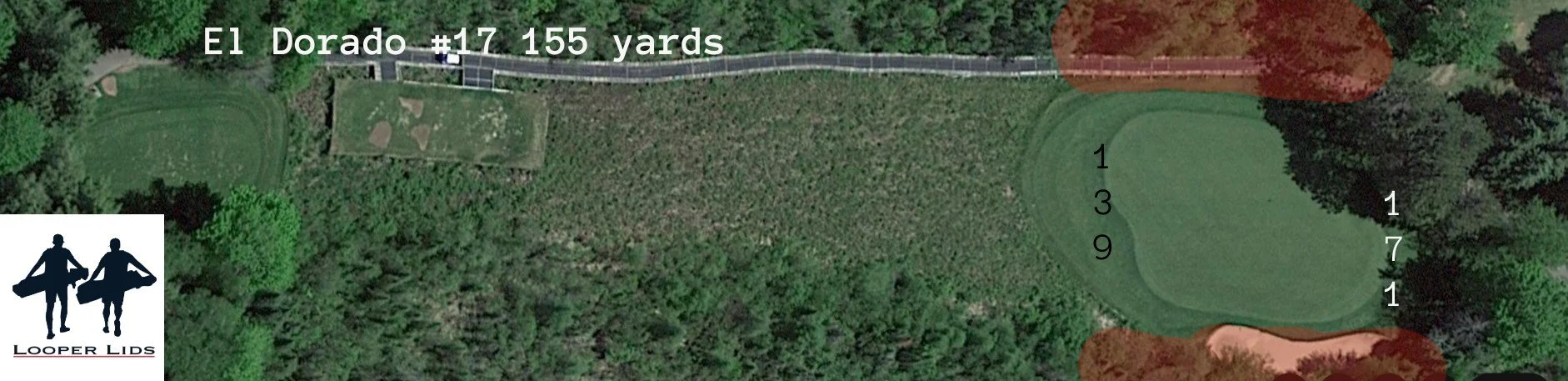
#17
The 17th hole gives you a breather between the last two tough holes and the 18th, which is arguably the hardest hole on the course. Usually, a good 8-iron for me—there isn’t much to talk about here.
You can see that there is waste area surrounding the green complex, but it’s a pretty large target.
The green complex slopes from back to front and right to left. There are some interesting little pockets on this green, so make sure to take a good look for multiple angles. There are plenty of putts that don’t follow the general slope of the green.

#18
Saddle up; this hole is usually a rough ride. The floating teeing area had seen better days the last time I played at El Dorado, so prepare for an uneven lie on your tee shot. The fairway is wider than it looks, and most can hit their driver without much concern about going through the fairway. If you stay short of 233 yards, the fairway is an additional 10 yards wider, but it nearly assures you’ll have a shot of 200 yards or more remaining.
Like the par 3 12th, take enough club to fly over the green, and you won’t have to worry about whether or not your shot will carry the water. Even a slight mis-hit has a chance of carrying the water. If you aren’t up for the challenge of going for the green, there’s nothing wrong with bailing out short-left.
The green complex slopes from left to right and back to front. This is one of the few greens where the left-right tilt is more prominent than the back-front tilt. If you need to settle any side bets, I suggest a closest-to-the-pin challenge from the left side of the 18th green all the way to the 9th pin. This is all one green and requires a shoulder turn and a grunt to get the ball to roll that far. Just make sure no one is coming up to the 9th green—we aren’t here to take away from others!
Conclusion:
El Dorado is a classic tree-lined, swampy golf course that utilizes these features to offer golfers plenty of risk/reward decisions, which can lead to the highest of highs and some really low lows. I haven’t played here in a year or two, but I’m going to make a point to drive down to Cadillac as soon as it opens (writing this in March).
I truly believe that if you’re striking the ball well and playing the percentages, you can hit a lot of greens here. Looking back at my previous rounds recorded on my Garmin watch, I had one round where I hit 14 out of 18 greens. Sadly, I had four three-putts and barely broke 80, but this is definitely a ball-striker’s course.
If you haven’t checked it out yet, I highly recommend it. And I appreciate you taking the time to read this!
-Your hat caddies
